
A visit to Hermitage
by Daniel Johnnes
May 14, 2026
The hill of Hermitage is one of the most majestic sites in the world of wine.
This world famous appellation is only about 140 hectares - about 300 acres - made up of a complex patchwork of soil types, with granite forming the core of the hill. This contributes to the powerful, structured style of the wines.
The various “lieux-dits” of the appellation, notably Bessards, Meal, Greffieux, Rocules, Varogne, Maison Blanche, l’Ermite and others have varying degrees of granite, loess, limestone, clay and alluvial deposits, with Bessards being the backbone of the greatest examples of Hermitage.
The history of winemaking here extends back to when the region was a Roman encampment. It is home to the Syrah grape for the red wines and mainly Marsanne for the whites with small degrees of Roussanne.
A quick visit last week with Edouard and Justine in preparation for this year’s Tablée reinforced my belief that Hermitage makes some of the greatest red wines on the planet. Wines of character, complexity, nuance, finesse and a true culture. Wines that speak loudly of a place and a history.
Two visits in particular provided moments of intense clarity on why this hill is so special.
The first one was to a now retired winemaker, Bernard Faurie. Fortunately, years ago, I was able to make a connection with him. It was a connection deeper than that of a client. He is a bit of a wizard and he saw that my interest went beyond commerce. I saw in him an old school winemaker in love with his craft and the place where he performed it. Authentic, committed and guided by instinct, not science. In the mold of Marius Gentaz, Henri Jayer, Jacques Reynaud, Pierre Ramonet.
We spent two hours with him in his quirky wine cellar/lounge (see photos) hearing his stories about his passion for tending his rose bushes and the wines he made.
Most of his vines have now been gifted to his son in law Emanuel Darnaud but he has kept a small parcel of Meal for his own production only available to his closest friends.
After tasting recent vintages of Cuvee Papy VDF (Syrah grown just outside the appellation) and the spectacular Méal based Hermitage 2023 he generously opened the 2018 which is a blend for the English market of Bessards, Méal and Greffieux. A wine of incredible depth layered with smokey and floral notes. Lastly he opened one of three remaining bottles of his 1983 vintage (also Edouard’s birth year!) The wine was intact but the enjoyment was based more on feeling privileged to be the recipient of his trust, generosity and friendship.
The other visit was with Jean-Louis Chave, who one might call “The King of Hermitage”. No one in the appellation is revered as much as Chave.
His roots in the small one-horse town of Mauves extend back to 1481. He is the largest private owner of land on the hill, with about 13 hectares of Syrah, Marsanne and Roussanne across a number of “lieux dits” that make up his final blends of Hermitage Rouge and Blanc and occasionally, the famous Cuvée Cathelin.
Having known Jean-Louis for almost four decades, a visit with him can last three-four-five hours wandering along the cavernous depths of his cool cellars, occasionally tasting from barrel and bottle but always accompanied by engaging thoughtful conversation about Hermitage, the world we live in, the wine market, friends, trends and memories of past dinners and shared bottles.
After getting a glimpse at the current vintages we relaxed into what seemed like the deepest, darkest corner of the cellar where we continued to converse and drink an Hermitage 1971 and then a 1964.
This was a true demonstration of passion, love of place and the desire to share with friends and colleagues. In short, isn’t this what our world of wine is all about???
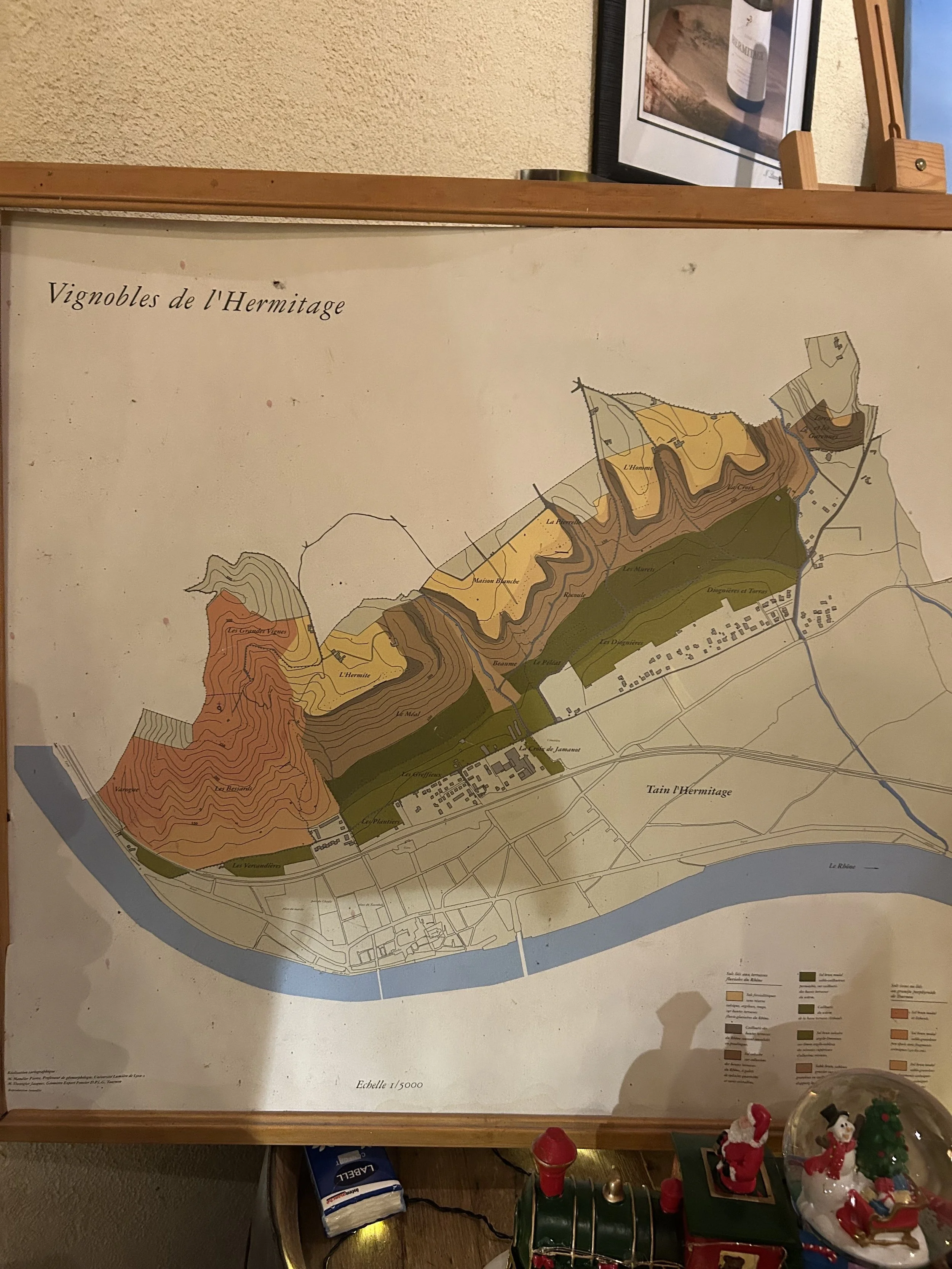
The complex geology of the hill of Hermitage
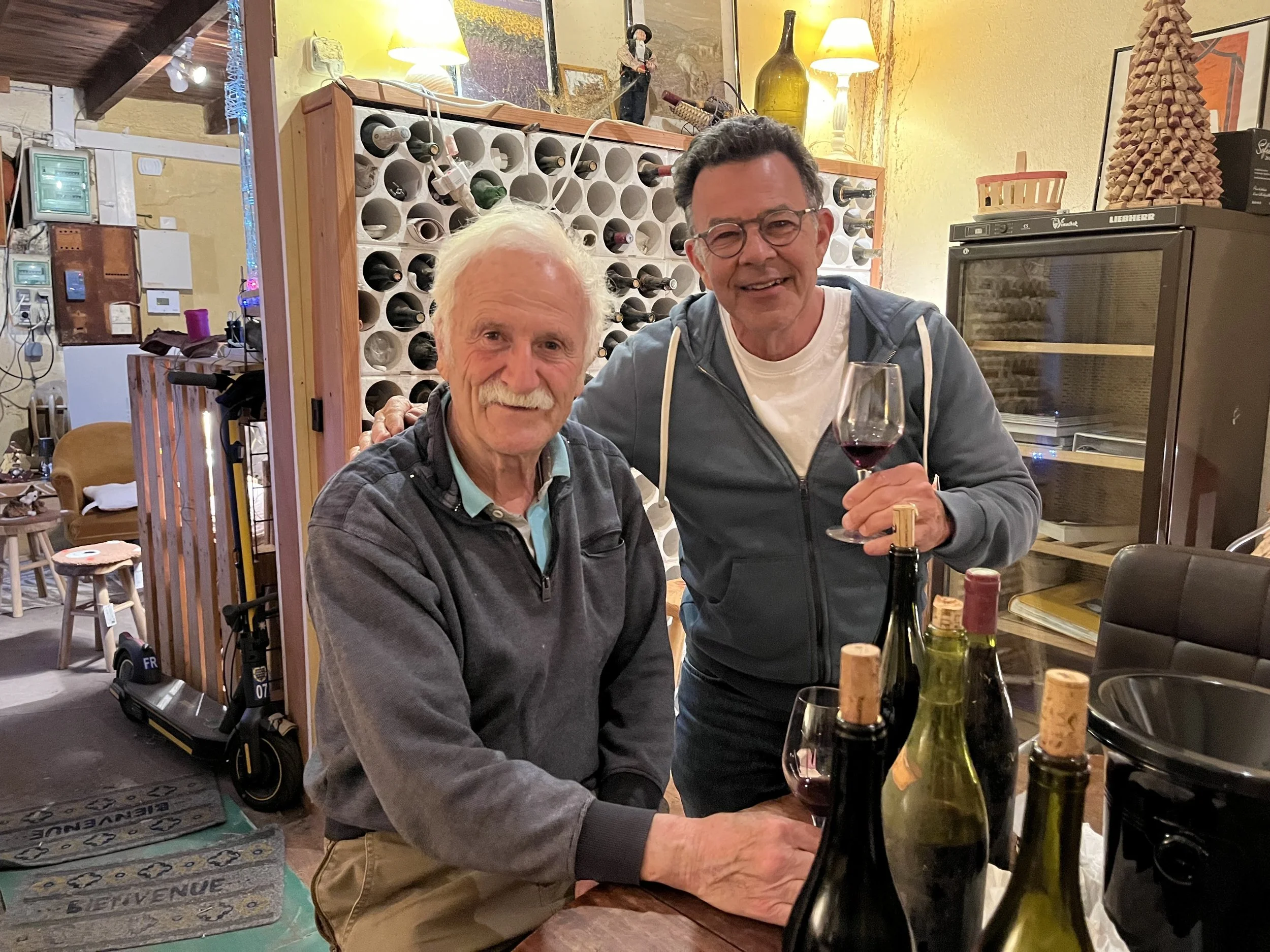
Bernard Faurie & Daniel
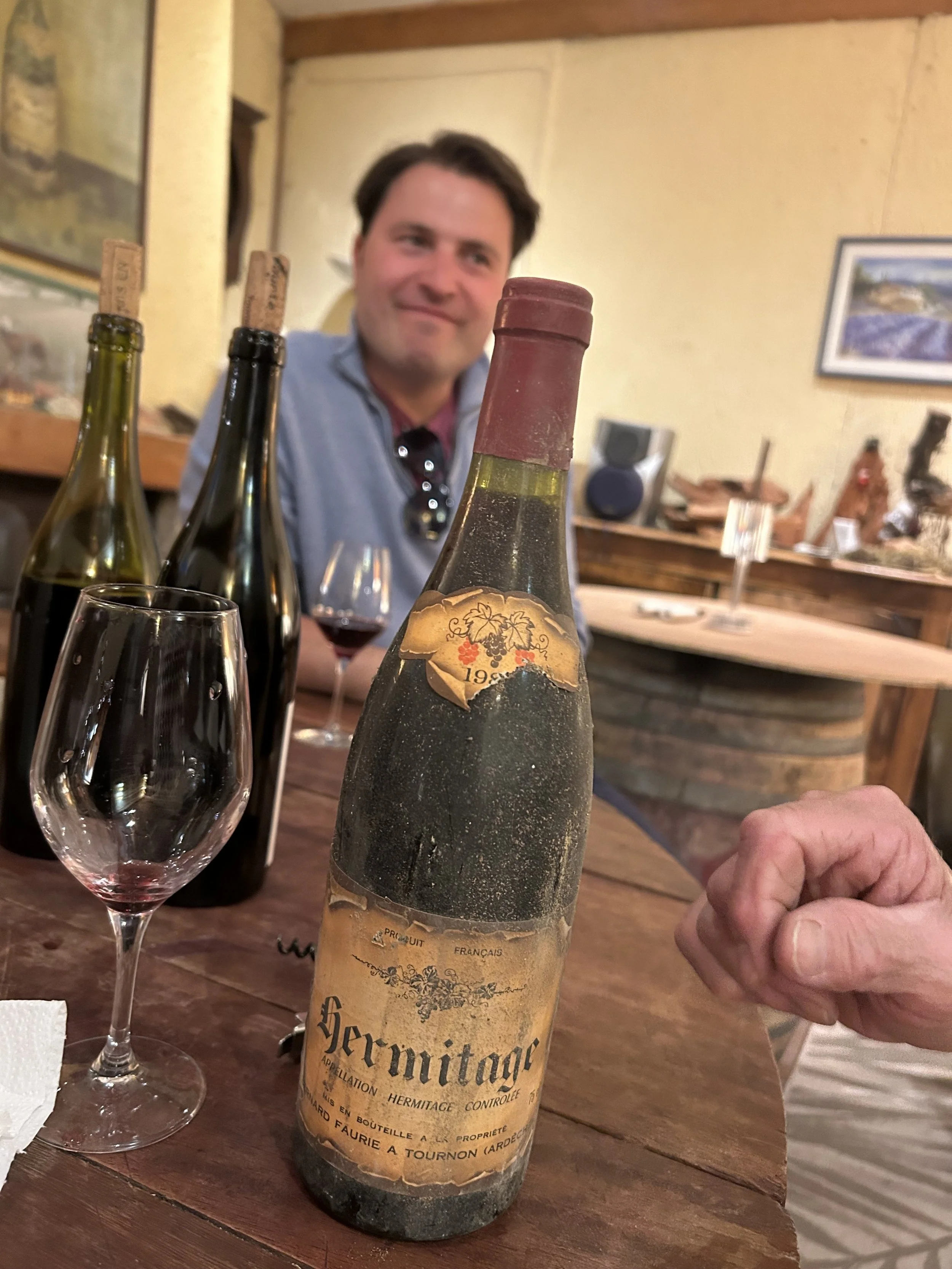
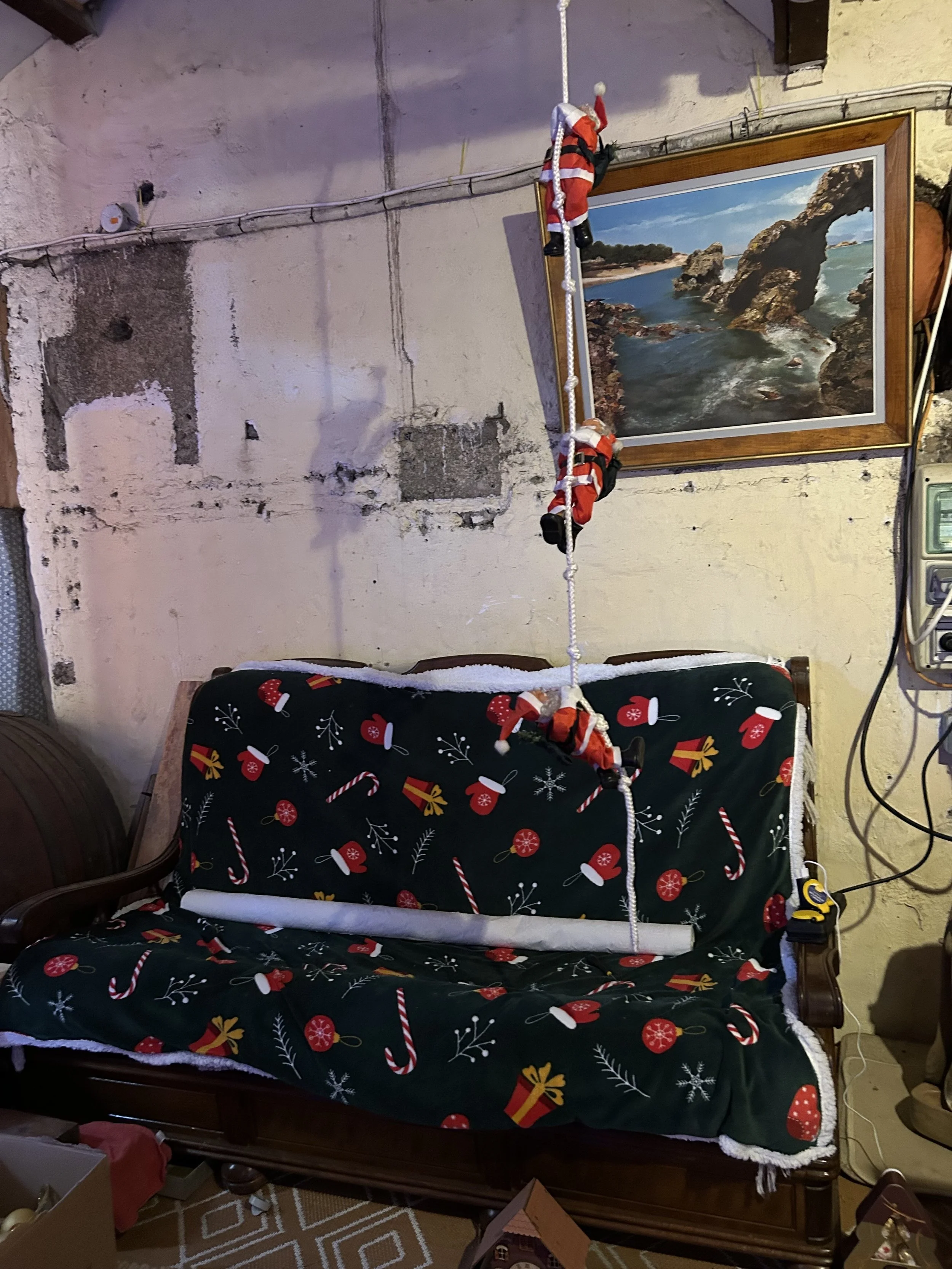
Bernard Faurie’s idiosyncratic wine cellar/lounge
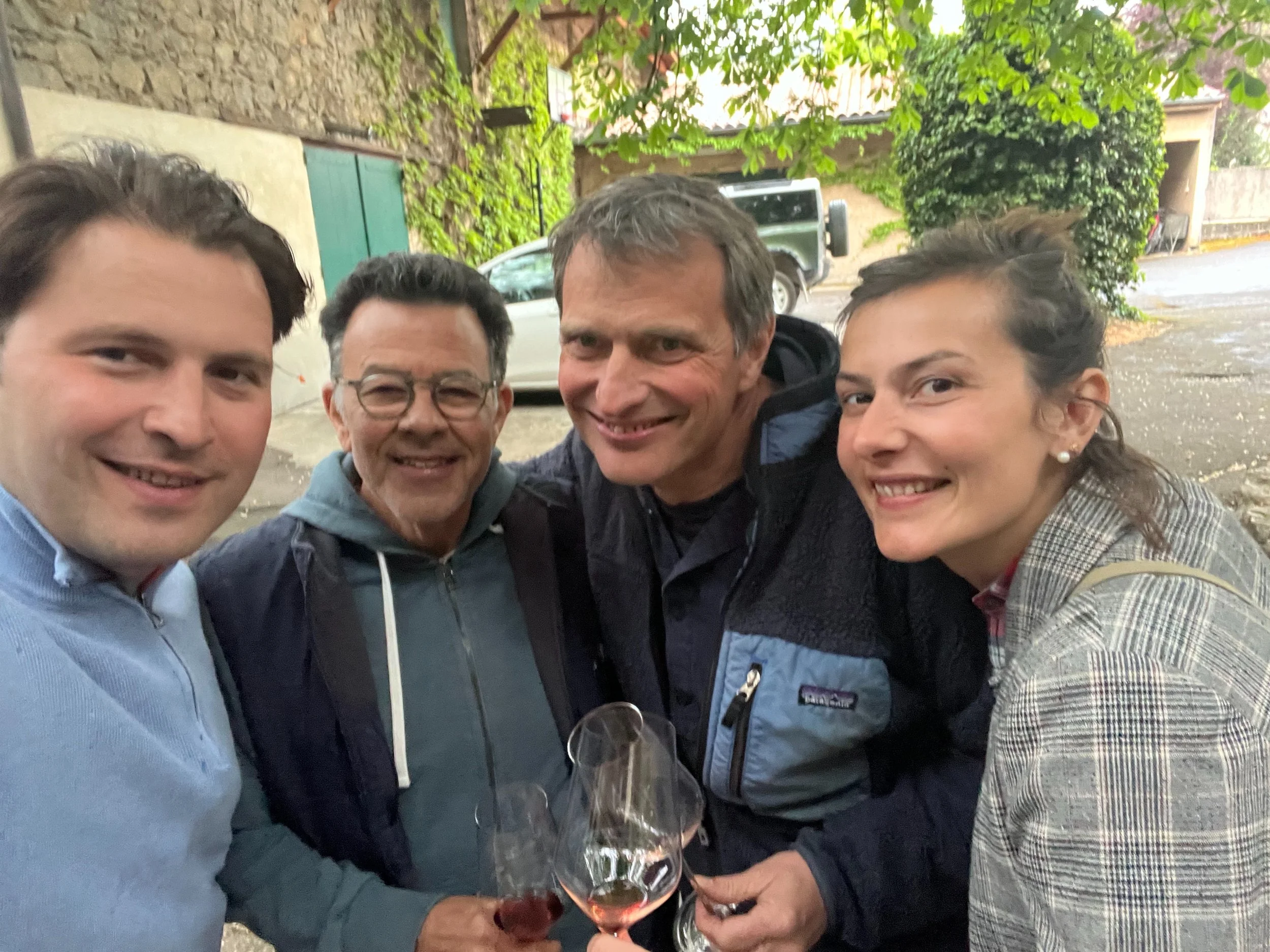
Edouard, Daniel, Jean-Louis Chave, Justine
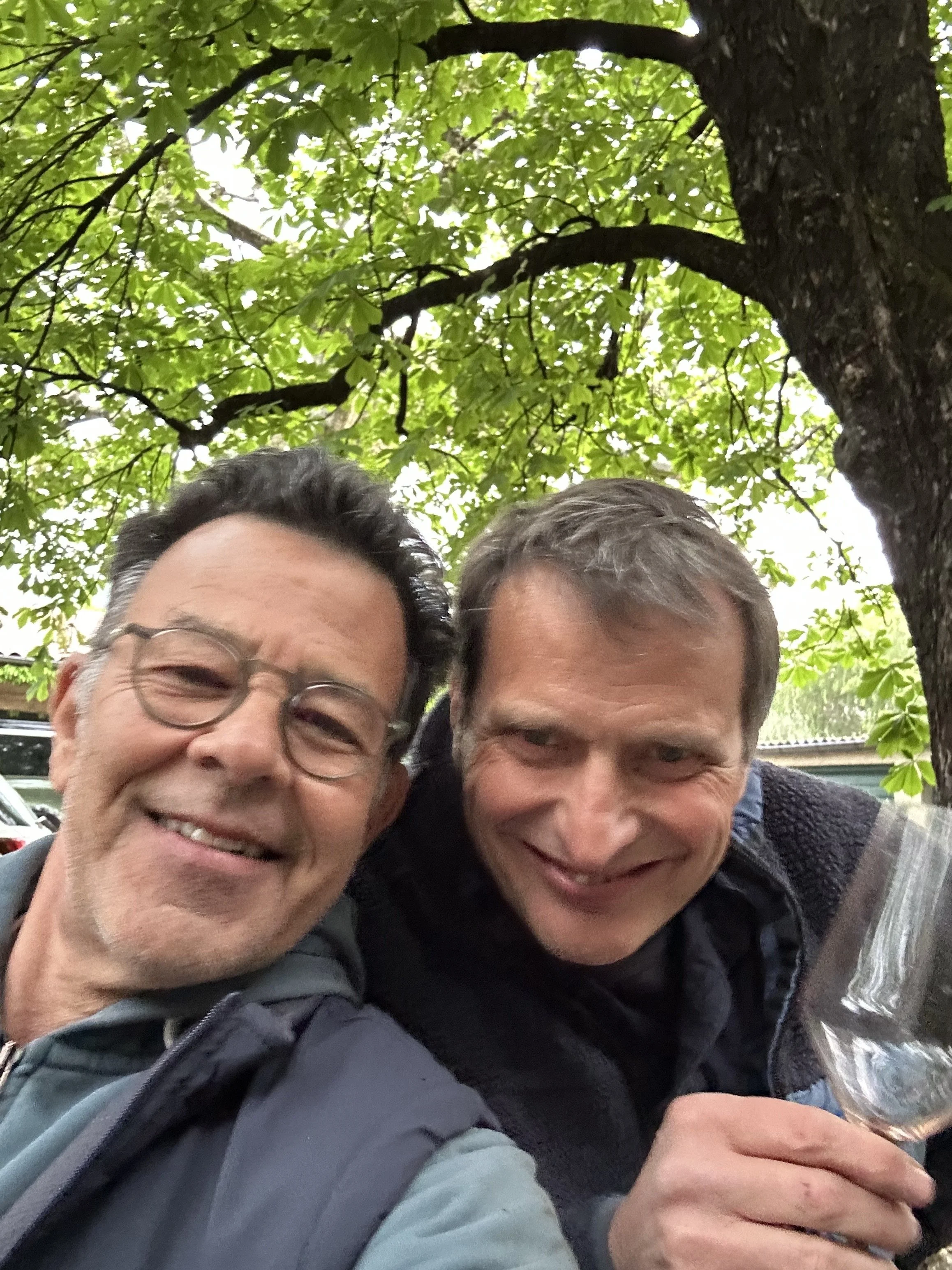
Daniel & Jean-Louis
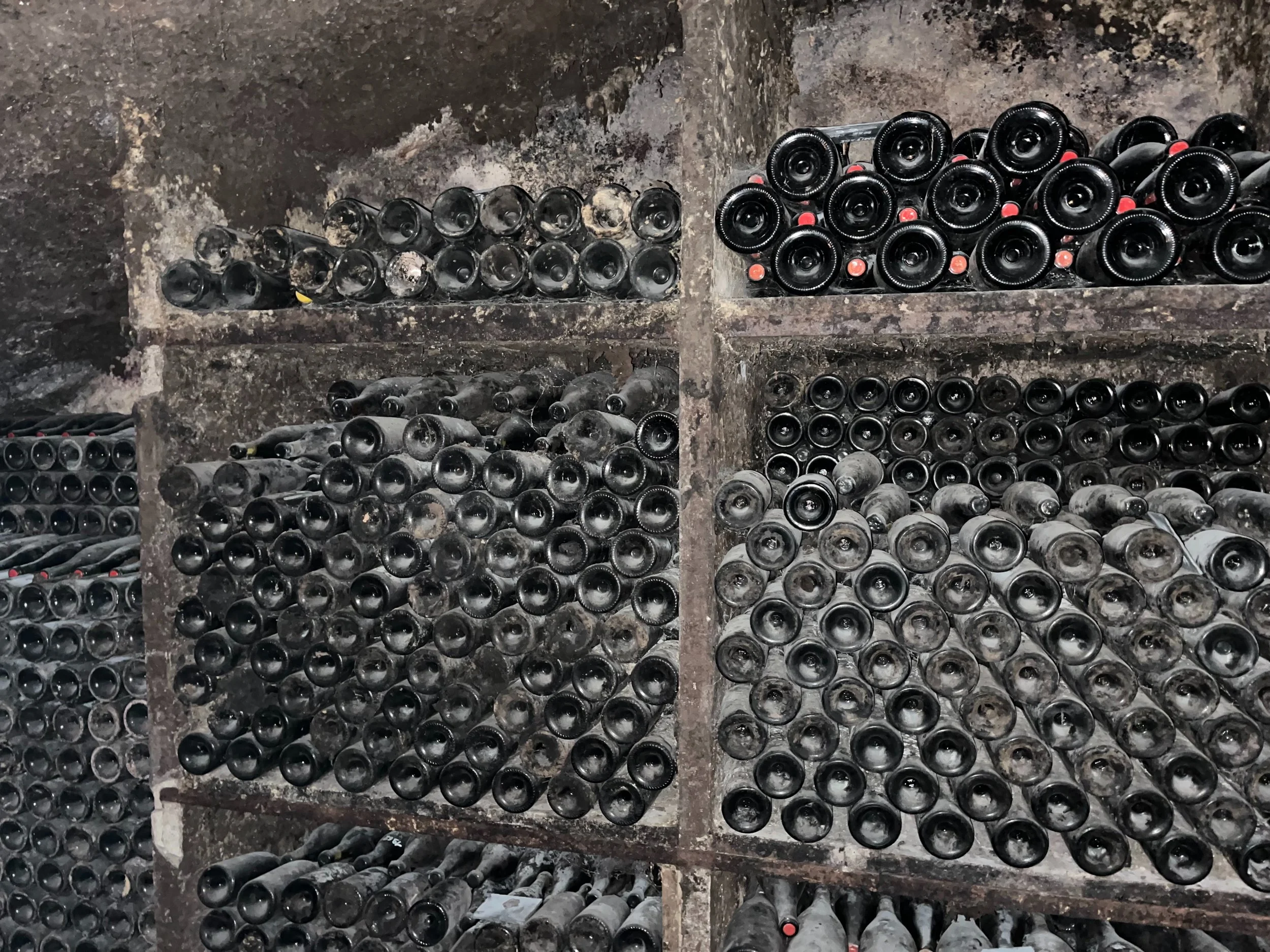
The incredible library of old wines at Domaine Chave