Recap - Chartogne-Taillet Dinner
by Edouard Bourgeois
July 14, 2022
Edouard Bourgeois
July 14, 2022
Shortly after he took over the family business at age 23, Alexandre Chartogne became one of the elite Champagne growers, focusing on single vineyard cuvées that reflect terroirs with outstanding accuracy. After he interned at famed Domaine Jacques Selosse, then under the guidance of grand master Anselme, he embraced the complex (to say the least) philosophy of this guru who naturally became his mentor. Testing various vessels from concrete eggs to used barrels from his friends in Burgundy, Alexandre makes it a point to work in the most traditional way possible. While he doesn’t care about an organic certification, his farming is recognized as a model of environmental awareness and understanding of the terroir.
Merfy, the small village where he and his ancestors have been growing vines since the late 15th century, is not the most famous. Yet thanks to Chartogne’s hard labor, this commune in the Northern Montagne de Reims has been revealed through his single cuvées that savvy sommeliers around the world strive to adorn their cherished wine list with.

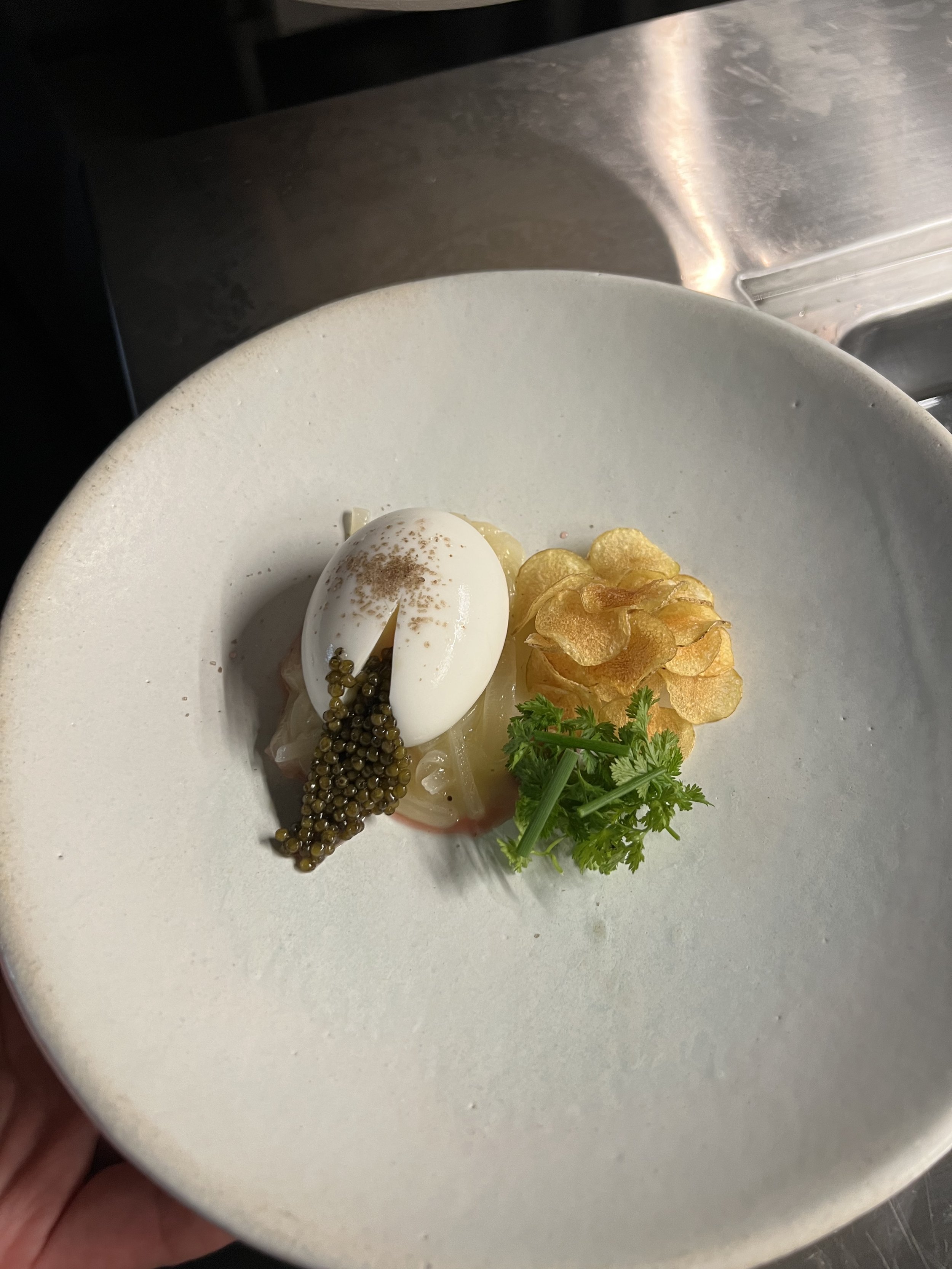
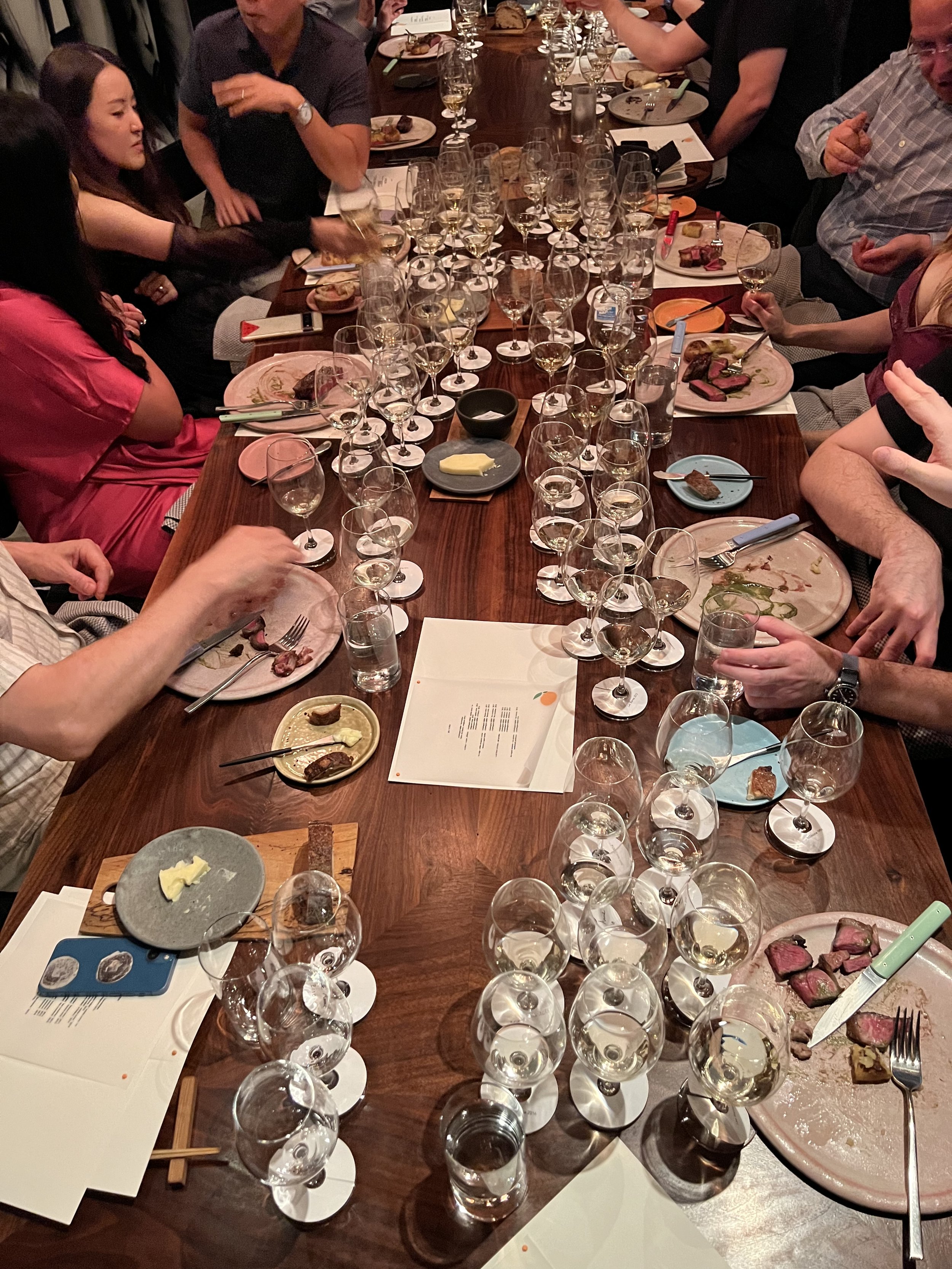
The expertly prepared cuisine of Momofuku Ko paired magically with these fine Champagnes.
Here are my notes:
Opening with a glass of “Heurtebise” for the “welcome glass”, this cuvée, made entirely from Chardonnay from the 2016 harvest, delivered exquisite freshness.
Festivities continued with a flight of two vintages of the blended cuvée “Sainte-Anne”. 2014 offered mouth-watering acidity with irresistible shortbread and pastry aromatics, while the 2010 vintage, served out of a magnum, seemed creamier and extremely refined. We closed that flight with “Saint-Thierry” 2016, a blanc de noirs loaded with red fruit and spices.
We moved on to the second flight with two Pinot Meunier cuvées from the sandy site of “Beaux-Sens” from 2011 and 2013. Note that this cuvée was only produced in these two vintages and also 2014. Hazelnut was the unanimously chosen flavor profile to describe these two wines. I did find that the 2011 expectedly showed the vegetal character of that difficult vintage, with notes of green asparagus. The 2013 appeared much sweeter. Two other wines were poured in parallel: “Couarres” 2017 and 2010. While the young and solar 2017 exploded with energy and panache, the 2010 revealed a hint of oxidation, tertiary aromas reminiscent of mushroom and forest floor. “Couarres” is a rich clay site planted with a blend of Pinot Noir and Chardonnay. The final proportion in the wine depends on the vintage but tends to be equal parts.
Ko’s must-have fried chicken was partnered with a vertical of “Orizeaux”. This pure Pinot Noir cuvée is truly magical. Planted in 1970 on a mount that is both exposed south and north tends to produce an atypically rich wine for the village. Alexandre talks at length about the importance of working with old vines so they can dig deep to reach the chalk. In his words, the plant needs at least 15 year of age to go through the thick top layer of sand and extract the complex DNA of the terroir. “Orizeaux” 2016 was gorgeous, once again bursting with small red fruit aromas. 2012 was marked by a firm acidity and I was happily surprised with the 2011. Its complex minerality made me forget the quite unpleasant green notes the vintage often gives. Great job!
Finally, we ended on a high note with the last three wines. The oldest cuvée of the night, also the only one Alexandre Chartogne didn’t make (he was 13 years old then) was a 1996 vintage. Despite my research, I couldn’t find any information on this wine. I found it to be quite flashy and with a strong personality but quickly fading. It was not the wine of the night for anyone but certainly an interesting comparison of style. The wine of the night may have been the superb “Les Barres” 2015 which in my notes received the three-letter adjective “wow”. The ungrafted Pinot Noir from that site was planted in 1952 and clearly had the shoulders to match the juicy strip loin we served with it. It had notes of earl grey and almost a red Burgundy quality to it. Truly memorable. Finally, we went back to Orizeaux with the 2010 vintage. It appeared much fresher than the “Couarres” from the same year, served earlier that night. Although made entirely from Pinot Noir, I found aromatic descriptors I would usually attribute to a white wine such as “tarte au citron meringuée”, a shortened pastry base filled with lemon curd and topped with meringue. The acidity was piercing through a delicious, sweet core of exotic fruit.