
What's Pressoir Drinking - Les Noëls de Montbenault
by Edouard Bourgeois
April 12, 2024
by Edouard Bourgeois
April 12, 2024
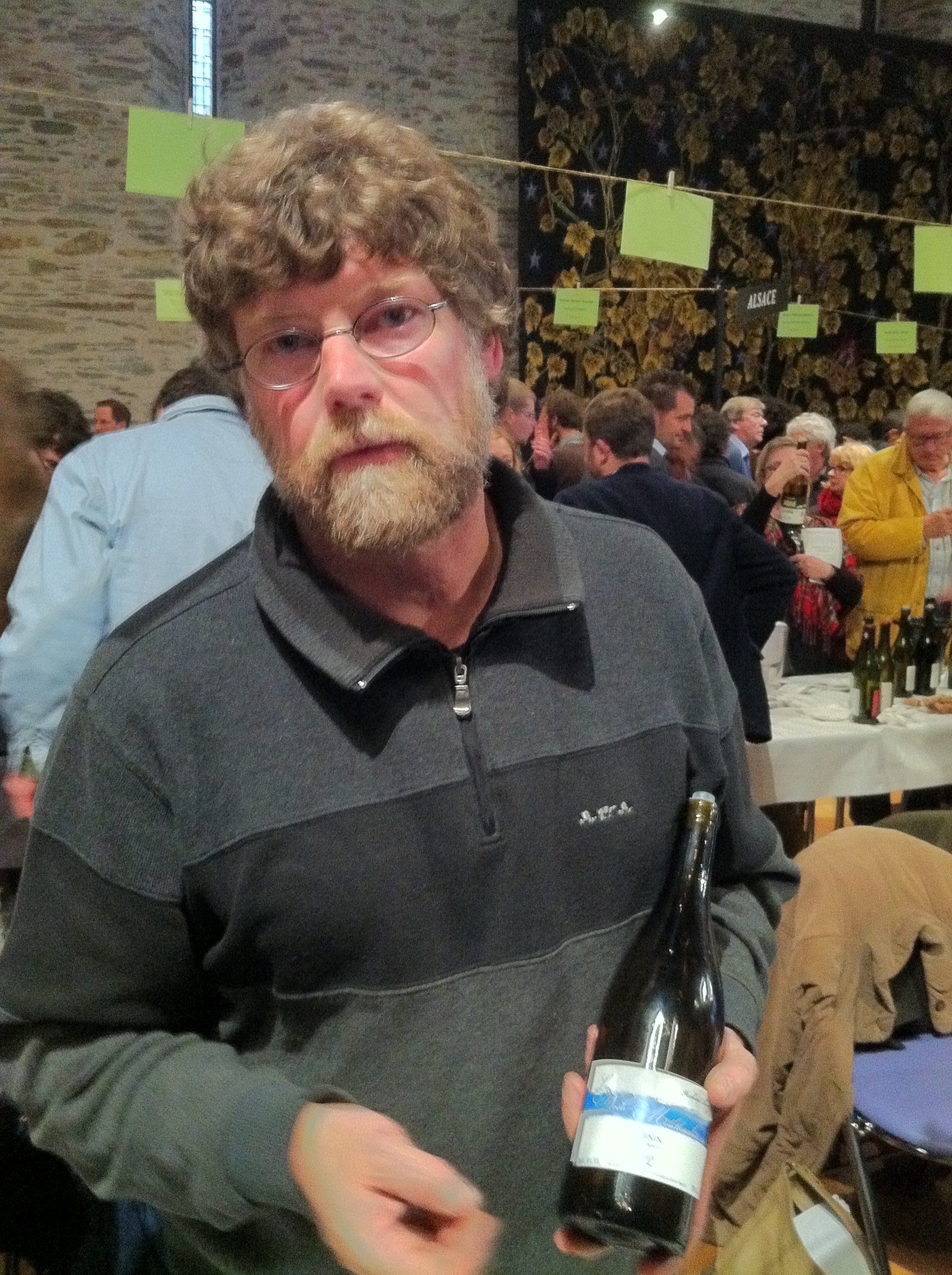
I tasted my first sip of Chenin from Les Noels de Montbenault during La Tablée 2022. Needless to say, I couldn’t have had a more surprising wine that night, a polar opposite to the heady Grenache and powerful Syrah poured across the room. Pascaline Lepeltier generously shared with me and some others a taste of this mind-blowing Chenin. Her profound love for the grape variety was palpable as her eyes grew wide open while pouring the 2016 elixir from Richard Leroy.

A Chenin among the beasts of the Rhône at La Tablée 2022
Back to my desk, I did some research and found out more about why this wine was so special.
Richard Leroy is one of these prodigy winemakers who follow a vision while understanding all the complications of the journey to get where they want. Initially an amateur of wine tasting, Richard belonged to a Parisian wine club where he was able to taste many wines from around the world. Refining his palate, he decided to make his own wine. He purchased Noels de Montbenault in 1996, a domaine that had been in existence for 25 years and always treated organically. This 3 hectare property, located in Faye d’Anjou, is known for its remarkable sweet Chenins, made from “grains nobles”, these intriguing rotten grapes where the sugar gets concentrated by dehydration of the fruit. So, Richard naturally started making these sweet wines, but in 1998 the rain devastated his production, making it impossible to develop the precious noble rot. Another issue he saw with the production of sweet wines was the inevitable use of sulfur. Inspired by Mike Angeli, a neighbor vigneron known for his superb dry Chenins, Richard decided to gradually produce more dry wines and less sweet wines to eventually focus solely on dry wines from his 2 parcels: Les Noels de Montbenault and Les Rouliers.
Montbenault is 2 hectares and planted with 40 year old vines at the top of the hill overlooking the Layon River. The soil is composed of schist on top of a volcanic bedrock. The vineyard is exposed to the south and benefits from useful windy conditions that help in drying out the vines, which limits the development of diseases.

Schist in Noels de Montbenault
Richard follows the biodynamic principles and his aversion for sulfur has grown to the point that he now only uses 20mg of SO2/liter compared to the conventional 150 to even 180 mg/liter commonly used by French winemakers on average. Even the barrels he purchases have never been treated with sulfur.
Of course, when a winemaker decides to forgo sulfur in winemaking, the risks of flaws in wine start to emerge. One of them, known as “mouse”, a descriptor for an undesirable dusty aroma, became a center of Richard’s attention and he was able to understand its phenomenon and of the two vintages I was lucky enough to taste, none were affected by mousy aromatics. Instead, the ethereal purity and freshness in both the 2016 and the 2017 were the signature of these magnificent Chenins, reminiscent of almonds and sharp citrus.

What's Pressoir Drinking? Stéphane Bernaudeau, Vin de France "Les Onglés"
by Max Goldberg Liu
Wednesday May 19, 2021
Our 4-part THIRST for the Loire Valley series prompted some, well, thirst for Chenin Blanc, and this bottle from Anjou wizard Stéphane Bernaudeau was a perfect way to slake it.
From a 2 hectare parcel on schist, Les Onglés may be Stéphane’s “entry” wine but it shows a remarkable amount of personality and complexity, just like the man, who farms his vines biodynamically, by horse, and usually untrained (ie. no wires).
Aromas of lemon oil and spices lead to an almost shocking amount of salinity and precision on the palate, surrounding a core of stone fruit. The minerality is really quite astounding, as is the length. What’s more, the wine is only 11% alcohol and is a perfect example of how some growers and terroirs can achieve one of the hardest feats in wine - creating power and intensity without weight, a phenomenon that was ascribed to the vineyard of Les Amoureuses by Fred Mugnier at La Paulée this year.
Now, it is not quite fair to compare the wines in any capacity, but for me, there is an echo of that same sensation and emotion.
This wine was a perfect pairing with cheese, especially with an Epoisses brought by Justine to lunch.
Stéphane trained with the now legendary Mark Angeli of La Ferme de Sansonnière and is firmly established as a pillar now of the natural/biodynamic school of winemaking in the Anjou region. The wines are extremely limited in production as he only owns 3 hectares of vines, but are available from many of the top NYC retailers like Chambers Street, Flatiron, and Crush. Stéphane also makes an even more limited and rare Chenin from a vineyard called Les Nourissons which has an average vine age of over 110 years - if you find a bottle, definitely snatch it up!

