
Irrigation allowed on Hermitage?
Irrigation on Hermitage?
by Edouard
6/14/23
June 15, 2023
Edouard Bourgeois
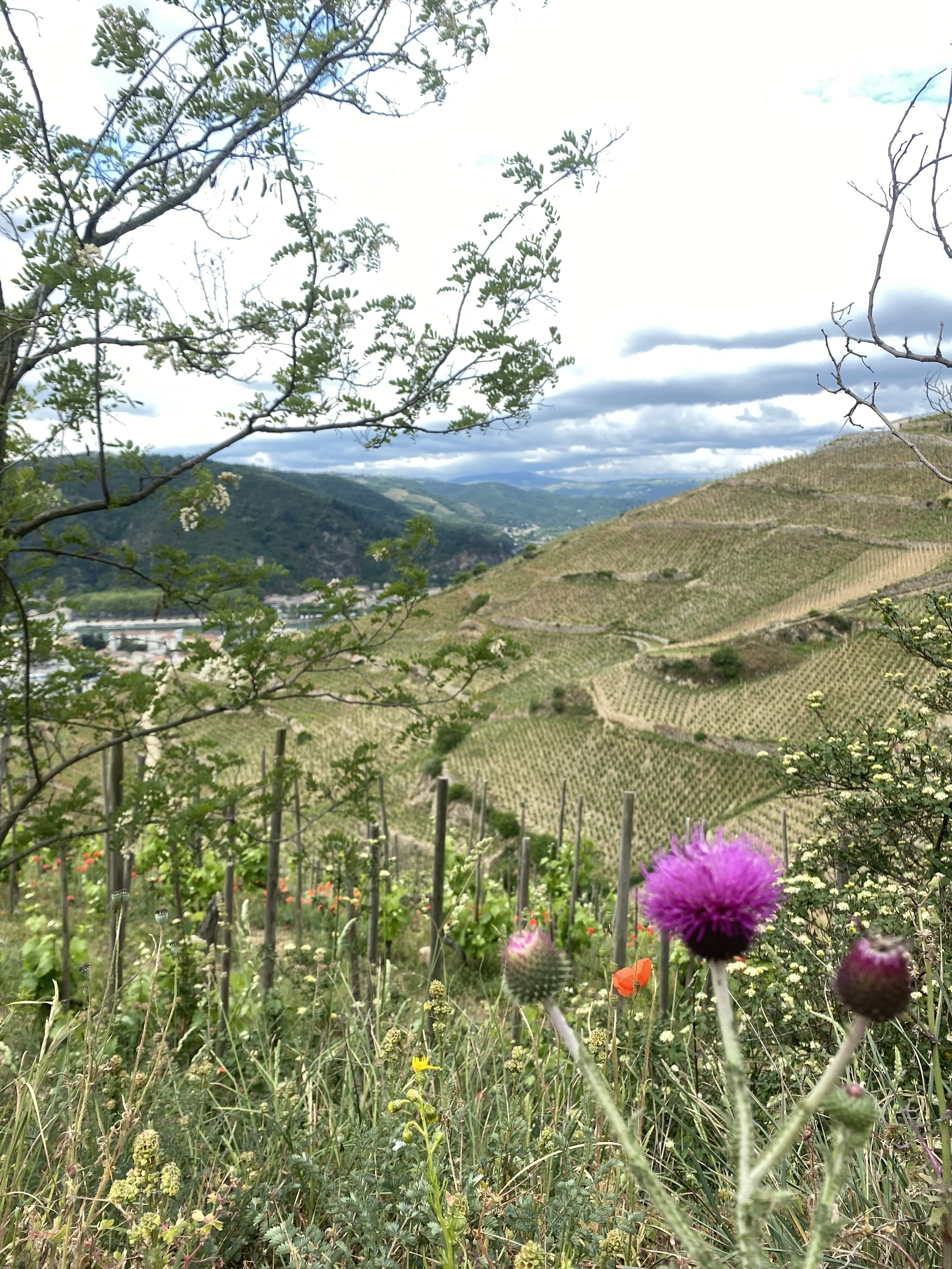
Hermitage: there is a bit of a mystical feel around “The Hill”. Hermitage distinguishes itself by many factors, starting with its location, along with Crozes-Hermitage, the only two appellations of the Northern Rhône on the left bank of the Rhône. All the other vineyards are on the other side of the river. Because the river turns a sharp ninety degrees there, the steep hill is perfectly nestled in the river’s elbow with ideal southern exposure providing plenty of sunlight.
It’s a small appellation, with just 137 hectares of vines, mostly planted with red grapes (exclusively Syrah), but there are some 30 hectares of white varieties (Marsanne, with a bit of Roussanne) that give ethereal and singular white wines. Although very discreet on wine lists and even among collectors due to its rarity, the white Hermitage is a wine of wonders. Once the most expensive white wine of France when Thomas Jefferson described it as the best white wine in the world in 1787, this blend of golden Roussanne and Marsanne is like nothing else and can age for decades.
There is a small group, about a dozen landowners, on the hill of Hermitage. Chapoutier owns the most with 34ha, followed by Jaboulet Ainé, with 25ha, including the vineyards of “Hermitage La Chapelle”, a wine on the list of “legends” with the 1961 vintage. The third place goes to one of the longest father-to-son-run wineries in the country, Domaine Chave, with its 25ha. A few others who grow grapes on Hermitage are Delas, Ferraton, Faurie and the Sorrels.
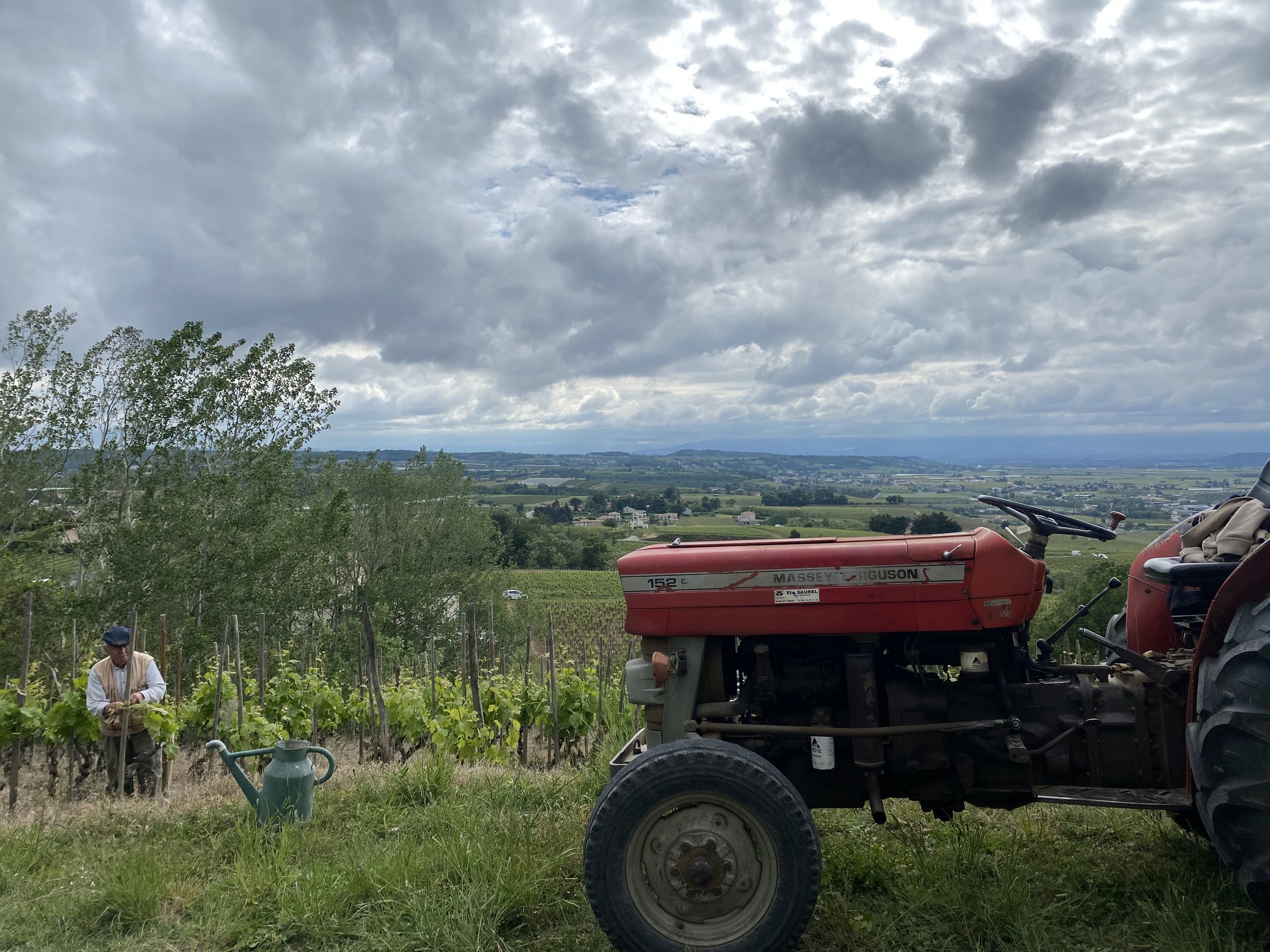
On a recent visit to the Rhône, it was brought to my attention from some of these producers that after the punishing drought in the regions they have experienced for the past few years, the question of irrigation surfaced. Allowing this practice on the Hill of Hermitage, dry-farmed for many centuries, would be groundbreaking news in the world of wine. It also raises another question. If Hermitage allows it, what about Côte-Rôtie, or even further north, dare I say Burgundy?
In Hermitage, the extreme 2020 vintage first raised the question of irrigation. Fortunately, rain eventually came that year. In 2022, a similar weather pattern brought a long period of drought and today, the conversation is no longer just gossip. Locals talk about using water pumped from the nearby Rhône River that would be stored in tanks at the top of the hill of Hermitage. It is also said that the vines would have to be watered manually (as if labor was not difficult enough on Hermitage!) so no drip system would be used.
And one important factor in the decision making of this proposition is that each landowner’s vote would weigh proportionally to the size of their land on the hill.
Although Michel Chapoutier was mentioned in a 2013 Decanter article as pretty confident in the future of winegrowing in the Rhône, I heard that he could accept the decision to irrigate on Hermitage and as the main owner of the appellation, that would make a substantial difference. Producer Guillaume Sorrel from Domaine Marc Sorrel is among those against irrigation. I haven’t heard about the others.
But after all, is irrigation even beneficial when rain fails? Grapevines originate from the Mediterranean basin where summers can make the thermometer rise over 100 degrees Fahrenheit. And these grapes have been producing wine for over two thousand years. So is the plant really suffering that much from the drought? Or is it adapting to the new environment as some of the most established vignerons suggest? In fact, many think that irrigation may be detrimental to making high quality wine since it may promote superficial growth of the root system, since water becomes available on the surface, roots don’t need to dig deep to find it, resulting in wines with less character. Irrigation may also give wines with higher alcohol, making them unbalanced and heady.

What's Pressoir Cooking?
Saumon a l’Oseille
By Edouard
6/1/2021
Saumon a l’Oseille
I arrived in France last week and we are staying at my mom’s country home in Northern Burgundy. I love that bucolic atmosphere, far from the concrete jungle of Manhattan. It’s a refreshing feeling to reconnect with nature and I rediscovered the joy of picking my own fruits and vegetables in the orchard. One morning I was sampling some radishes with my son while checking on the growth of the snap peas and lettuces when I stumbled upon a massive bush of sorrel. That tangy herb is a great ingredient for soup or even an omelette but it was made famous by Chefs Pierre & Jean Troisgros in the classic recipe “saumon à l’oseille”.
So the next morning I picked a handful of those beautiful green leaves and started cooking. The association of the tangy flavor of sorrel and the fattiness of the salmon is excellent. Cream and butter are obviously key ingredients - the recipe calls for 4.5 oz of butter for 2 lbs of salmon...
You can cook the fish “en papillote” in parchment paper but I prefer grilling it over wood charcoal and preparing the sauce on the side. The smoky flavor is fantastic and you get a nice crisp skin while the center of the fish remains juicy and barely cooked.
As far as wine pairing, it may come as a surprise (since my mom lives close to the Chablis vineyards) but I opened a white Bordeaux that paired beautifully with the dish. The Sauvignon blanc grassy profile matched the sorrel and the wine, being so dry, offered a great contrast to the rich and creamy sauce.
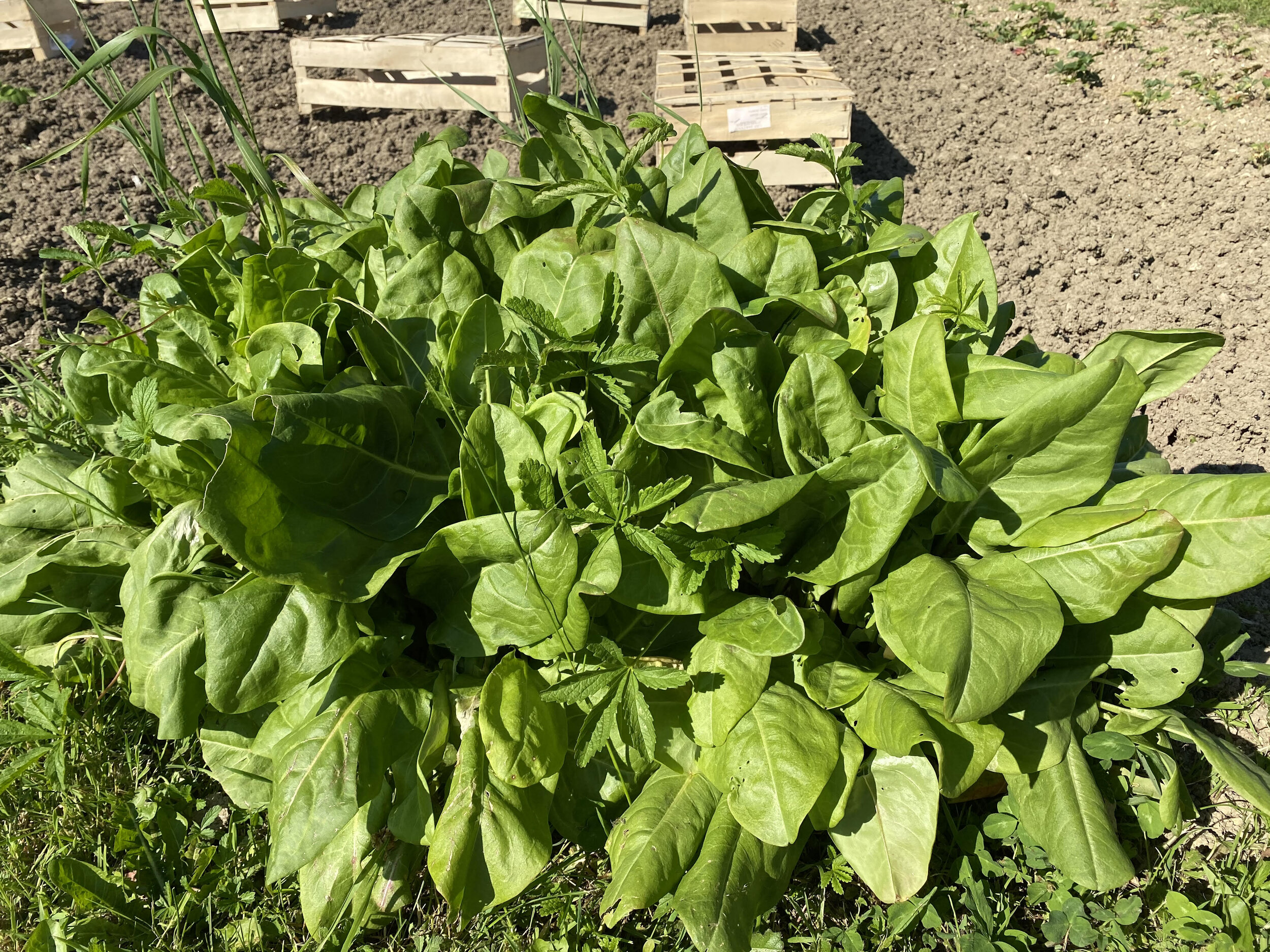
A nice patch of sorrel (oseille in French)
RECIPE FOR 4-6 PEOPLE
2 lbs of salmon filet
4.5 oz of butter
2.5 oz of shallots
7 fl oz of cream
7 fl oz of dry white wine
4 fl oz of fish stock
1 fl oz of dry vermouth
1/4 cup packed sorrel
1/2 a lemon
Salt
Fresh cracked pepper
INSTRUCTIONS
Mince the shallots and put them in a sauce pan with white wine, fish stock and vermouth. Reduce slowly.
Add the cream and reduce more.
Add the sorrel leaves and wait 20 seconds. Remove the pan from the fire and add the butter in small pieces while gently stirring. Don’t use a whisk so the leaves don’t break
Add a dash of lemon juice, season to taste
Grill the salmon on a very hot grill so the skin gets crispy.
Pour the sauce in a deep plate. Place the pieces of salmon on top
Bon appétit!

