1996 in champagne. what happened?
by Edouard Bourgeois
November 21, 2025
Ratings for 1996 often use words like "exceptional" and "grandiose," with some comparisons to 1928. What made 1996 objectively unique was the high average potential alcohol (10.3%) combined with high total acidity (10g/litre)—figures rarely seen together. As Charles Philipponnat noted, this is a significant jump from the 9.3% potential alcohol common forty years prior.
Acidity and potential alcohol work together for balance, but typically, when one is high, the other is low. In 1996, both figures were high. Bruno Paillard called it a 'naughty boy' vintage due to its unpredictable nature and the anxiety it caused producers while waiting for acidity levels to drop. However, the result for those with patience is "fantastic."
While acidity is key for aging, the true test is time. Over two decades later, the remaining 1996 bottles reveal which producers succeeded. The best examples are still complex and alluring, where the high acidity is balanced by a wide range of aromas, from brioche to stone fruit. Unfortunately, some other bottlings show only residual acidity, resulting in unbalanced and tart wines.
I recall opening a glorious bottle of 1996 Cristal for my son's birth seven years ago; the wine was still vibrant and charged.
Another fabulous example was made by Krug. As Olivier Krug said, "It’s a year where a good house or a good winemaker will make a good wine... It’s a tricky vintage." Other industry professionals have shared similar sentiments, noting that some vintners either opted out of making a vintage bottling or failed to achieve balance, resulting in wines that are already clumsy or tired.
The 1996 vintage often draws comparisons to its predecessor, 1995. These were the last two great Champagne vintages following the 1988, 1989, and 1990 trio. The 1996s are powerful wines; the best combine weight from ripeness with tension from acidity, providing the interest, complexity, and structure needed for long-term aging.
Interestingly, more houses released 1995 as a vintage Champagne than 1996, with a ratio of roughly 60% (1995) to 40% (1996).
Given its unpredictability, the safest bet for 1996 Champagne remains to go with producers you trust.
While looking for pictures of 1996 Champagne on my IPhone, I also found several other wines from various regions where the 1996 vintage truly shone, as seen in images below;jbgories
What to Read!
What to read
By Edouard
5/12/21
by Edouard Bourgeois
May 11, 2021
I was never the straight A student in school. Being told to study and learn specific topics often did not work with me. It was not due to a lack of interest in learning or laziness (maybe a little) but more because I had my own agenda. For example, I would sneakily be reading a book on the history of the blues in the Mississippi while in science class at age 12.
When I turned 18, I did not know what career path to choose and gave the hospitality industry a try, entering culinary school. It quickly became obvious that this decision proved to be the right one, especially when the topic of wine presented itself.
The reason why I am telling this story of mine is because I found in the subject of wine a meaningful outlet that allowed studying a large spectrum of topics. There is much more than just the trivia question of “what’s the grape variety of Cour Cheverny” (do you know?). Understanding wine means exploring the science of fermentation, the philosophy of so many inspiring producers, the geography of the different wine regions and among all of these subjects I would typically overlook in school, history.
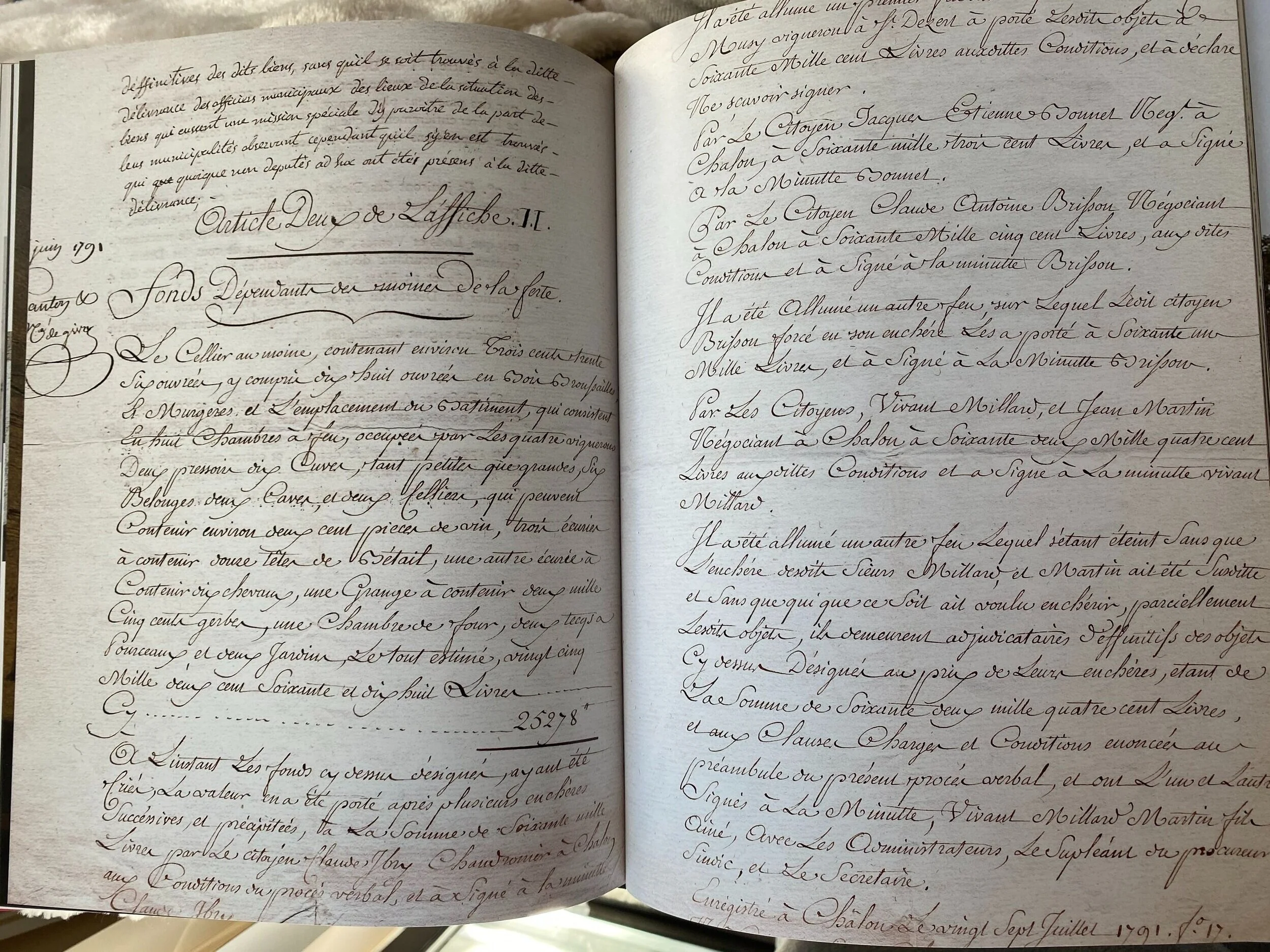
In addition to travelling to wine regions, tasting wines, and meeting various wine producers, reading the right wine books can obviously provide an immense source of information. I recently discovered one of these volumes that I believe should be a reference for all wine afficionados and frankly any history lover. Its title is “Nine Centuries in the Heart of Burgundy” a publication centered on the fabulous story of the Cellier aux Moines, a Burgundy domaine that we are featuring in our live THIRST Class on Saturday May 22nd.
The book features in depth information on the long and eventful history of Burgundy, anecdotes and stunning pictures of the landscape of the region, rare antique maps and other fascinating elements.