
What's Pressoir Cooking?
September 1, 2022
Justine Puaud
Cook a Harvest Meal Like a Winemaker
My first harvest experience was in 2013. I harvested at Château Carbonnieux, a Grand Crus Classé Château in Pessac-Léognan, Bordeaux. As it was my first time I couldn’t compare it to anything but I remember being tired for 3 long weeks, picking grapes from 7am to 5pm everyday, eating a sandwich in the vineyard in 20min and going back to work. I worked with a fun team! This year, I really wanted to experience the harvest in Burgundy. Well, I had to change my plan just a little bit as I’m 8 months pregnant… Last weekend, I went to see my friend Camille of Domaine Camille Thiriet in Comblanchien. As I couldn’t pick grapes and carry things, I decided to help her mom in the kitchen. I was quite impressed about their kitchen organization. Nadine has to feed 15 vendangeurs every day for breakfast, lunch and dinner. She shared with me her calendar with all the different recipes she had planned for the next 10 days: quiches, boeuf bourguignon, salades, blanquette de veau, et cetera…
10am is the morning break. We drove to the middle of the vineyard to find Camille and the vendangeurs and brought fresh croissants, pains au chocolat, madeleines, orange juice and coffee. I could see smiles on everyone’s face. Camille and Matt are super happy about the 2022 harvest so far. To be honest, they are quite impressed about the quantity they are getting even with the drought we had this summer in Burgundy. Friends and family are here too. They don’t seem to be tired, just happy to be around and help. After 1 hour with them, it’s time to get back to the kitchen and cook for lunch. On our way back to the Château de Comblanchien, I saw another winemaker in the back of his truck pouring red wine to his vendangeurs and offering them some charcuterie and cheese. The Bourguignons are generous and take a good care of the vendangeurs…
Back in the kitchen, Nadine explained she did an homemade ratatouille and has tons leftover. She decided to add eggs, cheese, crème fraiche and milk and make delicious vegetable quiches for today’s lunch.


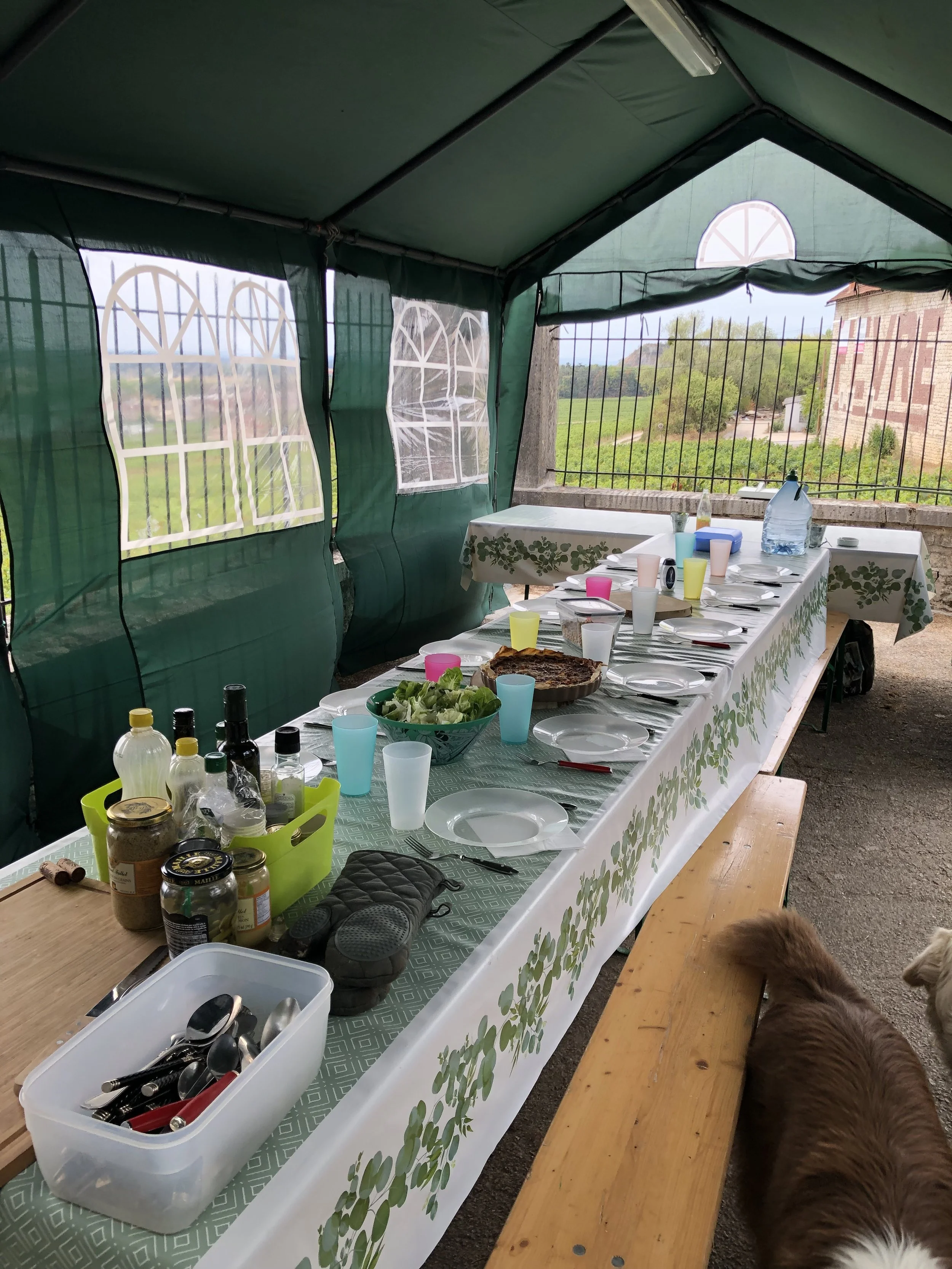
12pm - All the vendangeurs are here and hungry. After living 7 years in New York, I forgot how important lunch is in the French culture. From 12pm to 2pm, the vineyard looks so quiet….
2pm- It is with a full stomach that the vendangeurs are going back to work. Some people are going straight to Pommard to pick for one hour or two and the others are assigned at the table de tri. Rock & roll music and “bonne humeur” are here for the whole afternoon!

Côte de Nuits Les Retraits, tiny parcel next to the Clos de la Maréchale.

When DRC and Henri Jayer met at Domaine Camille Thiriet!!
NEWS FROM THE VINEYARD - THE HARVEST CHEZ ROULOT....
September 7, 2022
Raj Vaidya
As I described last week, I was honored with the opportunity to visit and help with the beginning of harvest in Meursault at Domaine Roulot two weeks ago. It was a life changing experience, and I learned so much in such a short time that I am sure it will take me a year to truly digest all the information. But I thought I’d share a few observations here this week to give you all a sense of what the experience is like.
The first thing that struck me is how big the team of pickers has to be. We started out the first day with thirty pickers and increased that number to nearly forty within a couple of days. Jean-Marc’s nieces and nephews all were in attendance, and his youngest son was strictly instructed to be on time the next day after showing up a bit tardy the first. No special treatment for the son of the boss! The whole picking team at Roulot was fed a casse-croûte, or light late breakfast in the vineyard, along with breakfast and lunch over several courses served every day. Despite the immense amount of work, I could see that the pickers were genuinely having a great time, and it didn’t hurt that they always had some delicious bottles of wine on the table at lunch…
Back in the cellar the work starts at 6:30am, with a quick breakfast followed by set up for the day. Pumps and hoses are assembled to connect the pressoir to the tanks which are used to settle the juice before barreling down to the cellar. After the first day, we also had to decant those tanks full of juice harvested the previous day off the large sediment (called the bourbe) to prepare the blends of juice before barreling. At Roulot, Jean-Marc is quite hands on with this process, making sure that he tastes the juice and decides exactly how much to decant, and what to remove as bourbe. The bourbe is then added to a small amount of juice from the end of the press cycle which has been left unprotected overnight to oxidize completely. Jean-Marc has learned that in that last press there is to be found all of the compounds and proteins which have the highest inclination to oxidize early. As a protection against premature oxidation, this oxidized juice is combined with the bourbe and filtered to remove those now oxidized compounds, then added back to the clear juice that had been decanted prior to going to barrel. Jean-Marc has been utilizing this technique for some years now, and the results are super promising (albeit a lot of work!)
The juice is then blended in one large tank and barreled down to the cellar. Jean-Marc uses traditional 228L barrels but also a variety of larger format vessels for his larger holdings, the Clos des Bouchères, Clos de la Baronne (a village appellation vineyard which is blended into his ‘straight’ Meursault) and Tessons.
Stockinger, a well regarded Austrian barrel maker, is common in the cellar - usually these are 1000L barrels. Additionally, Jean-Marc has been experimenting more and more with glass carboys (called the ‘Wine Globe’, this is hermetic glass in a globe shape the same size as the traditional 228L barrel) and in porcelain amphoras of various sizes. It’s pretty cool that even though he’s been making these wines for forty years he’s still experimenting and tweaking all the time.

The harvest kicked off at Domaine Roulot in a Bourgogne Blanc vineyard named Malpoirières. The team of pickers gets started around 7am every day.

The team starts the day early, around 6:30am in the winery, and during harvest 15-17h days are not unusual.
The juice flowing from the press before heading to the tank for debourbage. Lots of bees and yellow jackets show up to enjoy a sweet drink in the afternoon sun!
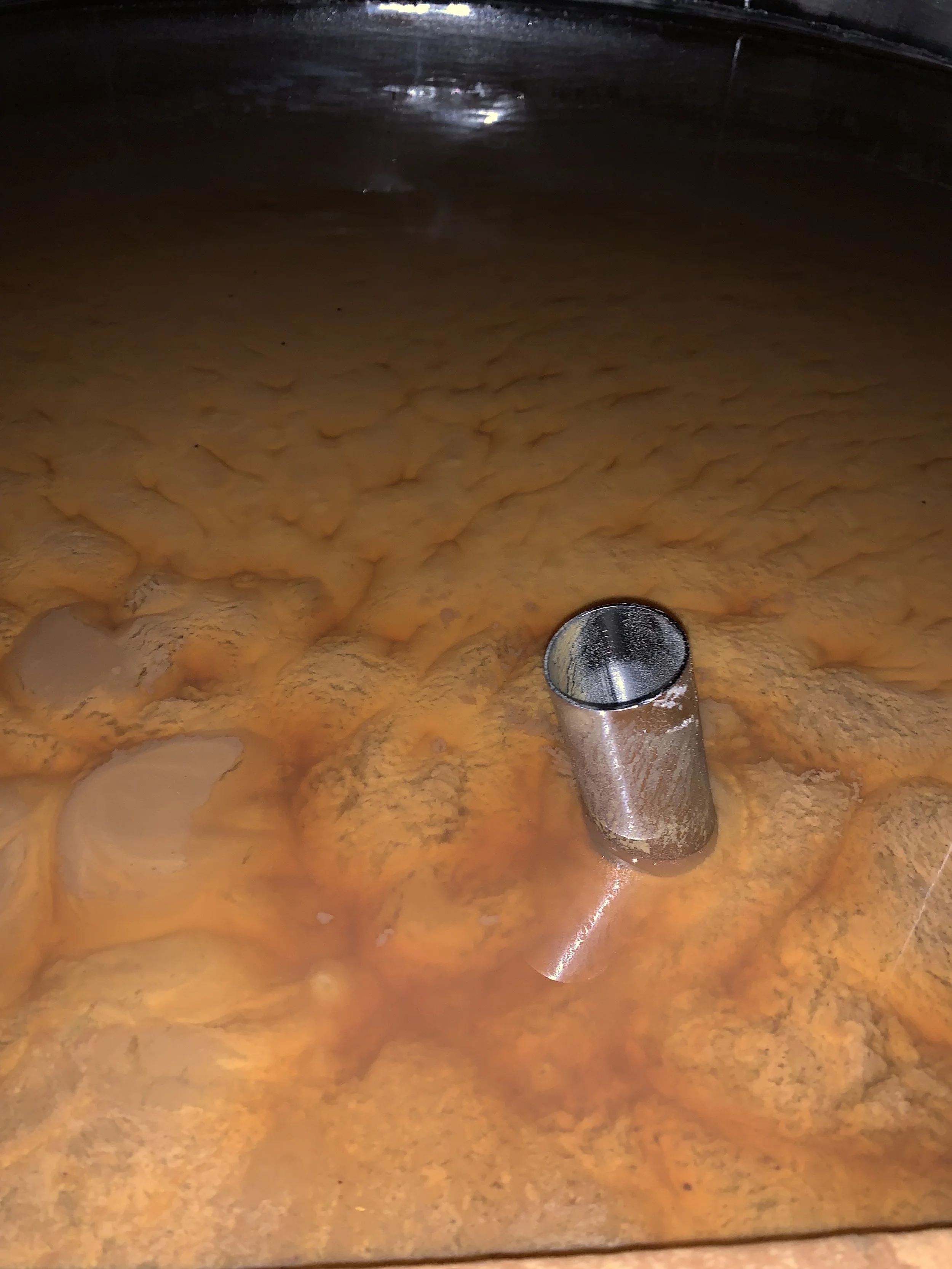
The bourbe, or solid matter, left after the decanting. This is filtered along with the last pressed juice and added back to the must before going to barrel.

Jean-Marc watching the last bit of debourbage, or decanting of the clear juice to select how much solid matter to allow to make it into the barrel. These solids offer protection for the juice and must as fermentation begins.

A Night Among Friends
August 31, 2022
Daniel Johnnes
Every so often, I have dinner with a couple of old friends and work colleagues. We each bring a bottle or two of wine. It goes without saying, the idea is to bring something special for this semi annual reunion.
This time we went to CheLi, a great Shanghi cuisine restaurant on St Marks Place.
The wine assignments were agreed upon: that David would bring a Rhone wine, Tim another Rhone and me, a Burgundy. The pressure was on to bring something great.
As we all know, wine has a way of showing differently depending on the temperature, place, occasion, time of day and other intangibles. This day everything was aligned, as everyone’s wine performed even better than expected.
We started with an extra surprise wine I brought as an aperitif. Chartogne Taillet Les Couarres 2010. Talk about setting the tone! With a blend of about 60% Chardonnay and 40% Pinot Noir, the wine blasted out of the glass with sweet fruit aromas and yeasty accents. Rich yet refreshing, it was a perfect centerpiece while waiting for David to arrive.
After a hefty glass for each of us and saving the rest for later in the evening, David was anxious to taste my Roumier Bonnes-Mares 2008. As was I. David doesn’t often display a lot of emotion but with a quick sniff he effusively let out a, “oh wow, that’s great” And, it was. An example of a 2008 shaking off its shackles and relaxing around a core of dense dark fruit. I was so happy since many 2008’s still hide behind a wall of tannin but this was as seductive as could be hoped for from a wine just inching it’s way into secondary aromas of smoke, spice, earth and ripe black fruit.
We had to restrain ourselves from drinking the Roumier too quickly with the duck, as waiting in the wings was a Marcel Juge Cornas 2015. An extra special bottle, not only because of how the wine tasted but also its historic significance, since 2015 was Juge’s last vintage. Marcel Juge, a contemporary of Raymond Trollat, Marius Gentaz and Noel Verset, was one of the “old school” Rhone producers whose soulful wines represented a different time. A time when the wines were whole cluster, old barrels, demi-muids or foudre and sold at local wine fairs or in bulk to restaurants or negociants. Not so any more!
The wine was deep in color, inky black with purple highlights, a nose of dried flowers, spice, damp earth, cardamom and black olives. It was dense on the palate yet surprisingly pure, fresh and silky. No signs of rusticity or gaminess. Truly a wine for the ages and one I will most likely never see again. Quite emotional in that sense.
Lastly was another iconic wine from a historic figure of Châteauneuf du Pape, Henri Bonneau Les Celestins 2006. Châteauneuf can at times show its sunny side with high alcohol and rough tannins but this wine was already developing secondary aromas of leather, game and mulled black berries. For a Pinot lover as I am, I was remarkably seduced by its balance, freshness and well integrated power and superb length. Henri Bonneau was a true master of “lesser” vintages and this one help up his reputation with pizazz.
A true night among friends!
News from the Vineyard - The harvest kicks off in Burgundy.
August 31, 2022
Raj Vaidya
I’ve just landed back in NYC after a week working as a stagière for the beginning of harvest in Meursault, and it was a spectacular experience which I’ll be sharing with you here on the Press in the coming weeks. To start off, a quick recap of the state of the harvest and an early sense of the vintage…

The very first grapes from Domaine Roulot’s harvest of 2022
The first harvest I witnessed at Domaine Roulot was on August 24th with a Bourgogne Blanc vineyard known as Malpoiriéres on the plain of Meursault. Grapes looked incredibly beautiful, and it was an idyllic day to begin, perfect clear weather and sunshine. As the grapes came to the press one bin after another, we quickly got the sense of the size of the harvest to come, which is, to put it lightly, robust. This Bourgogne vineyard has a permittance of 70 hectoliters per hectare for this year, and that was slightly exceeded at Roulot. This isn’t a problem as other Bourgogne vineyards we harvested were more modest in yield, so his blend will allow the average to fall well under the maximum yield. But it did bode well for the rest of the Meursault vineyards and sure enough, there is a large quantity of high quality grapes in great abundance.
I visited Domaine Marquis d’Angerville in Volnay after a full work day last Friday to see how their harvest is going, as I’d gotten wind that they began even before Roulot, on the 23rd. Guillaume d’Angerville and his winemaker Francois Duvivier met me with beaming smiles; the harvest was in full swing and very healthy, and they finished the entirety of picking by Monday evening. Similar story, it turns out, for much of the Pinot in the Volnay and Meursault vicinity, with high yields and exceptional quality. Guillaume also told me that although he was the earliest, the Lafarge, de Montille and Clos de la Chapelle wineries also started on the 25th.

A very content Marquis Guillaume d’Angerville preparing for his post harvest Paulée celebration with his team on Monday, August 29th.
Lafon began on the 24th as well, with nearly all the whites except Goutte d’Or and part of Charmes Premier Crus all in the winery by Tuesday the 30th (Montrachet was picked on the 30th, Volnay Santenots-de-Milieu started coming in on Monday the 29th and partially on the 30th, and with the large harvest and high ripeness levels they used a little bit of whole cluster in the Santenots this year.)
Dominique, Léa and Pierre Lafon watching some whole clusters of Volnay 1er Cru Santenots-de-Milieu being sorted before entering their vats on Tuesday August 30th (fairly early for this vineyard.)
The Côte de Nuits is just about to get started with harvest, and even a short bit north of Volnay, the vineyards in Beaune and Corton were just getting started at the beginning of this week, so I expect that in the far north of the Côte picking will only begin in these early days of September. Judging from Roulot, Lafon, and Genot-Boulanger, we are seeing potential alcohols which are pretty moderate, with nothing exceeding 13.4 degrees ABV thus far, a strong indicator of a very balanced set of wines to follow. Fermentations began in earnest on Sunday at Roulot, another good sign of healthy and stable musts. All in all things are looking great!
I’ll describe my first experiences at Roulot as well as some takeaways and things I found surprising in next week’s newsletter, look forward to hearing more then…
What's Pressoir Drinking
August 31, 2022
Raj Vaidya
A couple of weeks ago, I had some former colleagues over for a night of eating and drinking, and several of them were kind enough to dig very deep in their cellars to share several special bottles. What can I say, I’m a lucky guy!
Over the last two weeks I recounted the profound 1964 Bize Savigny 1er Cru Vergelesses and the memorable 1979 Volnay Caillerets from the Marquis d’Angerville. Clearly there had been a Burgundy theme, but we ended the night with one of the most compelling Rhônes I’ve ever tasted.
The Jasmin domaine has seen some ups and downs over the past decades, with certain eras when the wines are well known to be profound and others where they were underachievers. This 1971 was from an era that I had no experience with at all, and it was the oldest Jasmin I’ve every tasted.

The domaine dates back to the arrival in Ampuis of Alexandre Jasmin at the end of the 19th century. Alexandre showcased his domaine bottled wines in Paris expositions as early as 1909, highly unusual for the era. His son George took over the domaine in 1935 and is hailed as one of the greatest personas in the appellation, and by 1971, George’s son Robert had been working alongside his father for over a decade.
The wine had such delicacy in its structure that I was caught off guard - almost no perceptible tannin, softness and even a slightly sweet fruit (this could have been the remnants of chaptalization, to be fair). The color was reminiscent of Jacques Seysses’ early vintages at Dujac; almost more rosé than the color red. However the savory character of the wine was very intense, deeply gamey and leathery with textbook black pepper spice and a pervasive smokiness. Very long on the palate, it was the first thing on my mind when I woke up the next day. And given that I’m still thinking about it nearly three weeks later speaks to its complexity and brilliance!

Recap - Champagne and Pizza Dinner
Recap - Champagne and Pizza
by Edouard
8/26/22
August 25, 2022
Edouard Bourgeois
Champagne is very adaptable when it comes to pairing with food. The naturally high acidity revives the palate and the fruity quality may provide enough power to match with hearty dishes.
I’ve always thought that there is a true love affair between the cold bubbles and the crispy dough and tomato sauce of the world’s favorite food, pizza.
I believe that last night’s dinner at Marta proved me right! Here is a recap of my impressions on the different cuvées.

We kicked things off with Lenoble Brut Nature, a champagne that received no dosage at all before bottling. It delivered exactly as expected with crispness and good balance of fruit (75% of Pinots, both Meunier and Noir and the rest being Chardonnay) but somehow flew under the radar a bit, maybe because it was the first wine. This first flight was completed with three Blanc de Blancs, by definition champagne made only with Chardonnay. First, the non-vintage from Henriot, served from a magnum. This is made very traditionally in a way that the complex blend of its dozen crus varies slightly according to the base vintage in order to maintain a “house style” year after year. The third champagne was from A. Margaine, a Blanc de Blancs from the celebrated 2008 vintage. Although this producer is surrounded by Pinot Noir because of its location on the Montagne de Reims, its specialty is in fact Chardonnay. Margaine uses a specific clone of over 30 year-old Chardonnay vines that does really well in their village of Villers-Marmery. No malolactic fermentation here to preserve a certain freshness. We closed the first flight with a zippy magnum of Valentin Leflaive Blanc de Blancs, Mesnil sur Oger, non vintage. With strong roots in the Cote d’Or, the Leflaive family approaches their champagne winemaking the same way they do in Burgundy, focusing on site specific cuvées. Here, this bottling showed a classic expression of one of the most respected villages of the Côte des Blancs, famous for its immaculate white chalk, Mesnil-sur-Oger.
The second flight entered the scene with a boom. Complete change of décor with four vinous, deep champagnes where Pinot Noir was the star of the show. First, a gorgeous bottle of Philipponnat Royale Reserve. It should be mentioned that this is the “entry level” cuvée of the house yet in my opinion, it displays the quality of a top champagne. The blend of 65% of Pinot Noir, 30% Chardonnay and a sprinkle of Pinot Meunier makes for a solid wine, proudly exhibiting the style of Mareuil-sur-Ay. Note, 30% of reserve wines, aged in a solera system, are certainly responsible for the depth of this excellent champagne. The second wine in this flight was served from magnum and one of the many show-stoppers of the night. The majestic Cuvée Louis from Tarlant imposed itself, showing vinosity and savory notes from its age, being from two harvests, 1999 and 2000. Perfectly crafted blend of equal parts Chardonnay and Pinot Noir, the first Cuvée Louis was created in 1982 and is always fermented in Burgundy barrels. No Malolactic fermentation and no dosage. This magnum reminded everyone that champagne is indeed wine. We continued with another magnum of producer Paul Bara, located in one of the most celebrated Pinot Noir villages of the Montagne de Reims, Bouzy. Fermented in stainless steel, this Pinot specialist works with over 30 year old vines and only uses the first and most pure juice that comes out of the press, also known as “the cuvée”. And finally, a true Blanc de Noirs by the great Eric Rodez. This bottling, Empreinte Noire 2009, is a focus of four sites, all within Ambonnay. Eric likes to identify this wine philosophically as an “anti-champagne”. What it means by that is that champagne has a history of blending grapes, sites and vintages but here, he only uses one year, one grape and one village. Again, here the oak plays a great role in winemaking, providing structure and volume and this wine was the favorite of many attendees.
While the irresistible scent of pizza filled the room, we moved on to the last flight, starting with a voluptuous bottle from Fred Savart, cuvée “l’Année” from 2011. Despite the complicated nature of the vintage, the wine’s bouquet of ripe red fruits and juiciness was quite impressive, I found. The blend, 60% Pinot Noir and 40% Chardonnay, didn’t go through malolactic fermentation, was aged in large oak barrels, one of Savart’s signature move, and only received 3 grams of sugar/liter at bottling. Great performance. We followed with Pol Roger’s prestige cuvée, the inimitable “Sir Winston Churchill”. Named after the famous prime minister, known for his hedonism and wit, this champagne perfectly matched the quote Sir Churchill would use: “My tastes are simple, I’m easily satisfied with the best.” Crafted only using Grand Crus Chardonnay and Pinot Noir grapes across the Marne, riddled by hand in the deeper part of the Pol Roger cellars at 33 meters deep, this champagne is a classic. From the gorgeous 1999 vintage, it was full of savory notes, complex spices and a touch of smoky, toasted quality attributed to the long aging. Another prestige cuvée from one of the most recognizable names, Veuve Clicquot, “La Grande Dame” was served next, from the 2004 vintage. A beautiful bottle also made using eight Grands Crus in the Montagne de Reims and the Côte des Blancs.
We closed this champagne celebration with Delamotte’s newest addition, a delicate, lacy Brut Rosé. Vinified using a expertly managed maceration of Pinot Noir from Ambonnay, Bouzy and Tours-sur-Marne, this wine was succulent and could make you forget that Delamotte, sibling of Champagne Salon, is known to be a Chardonnay specialist!

What's Pressoir Drinking?
August 25, 2022
Raj Vaidya
A couple of weeks ago, I had a few former colleagues over for a night of eating and drinking, and several of them were kind enough to dig very deep in their cellars to share several special bottles. What can I say, I’m a lucky guy!
Last week I recounted the stellar 1964 Bize Savigny 1er Cru that held the distinction of being the oldest bottle. This week I wanted to reflect on the youngest bottle of the night (I know, this sounds crazy, but it was the youngest…), the 1979 Volnay Caillerets from the Marquis d’Angerville.
The storied history of this estate back to the early 1800’s, though it was in 1906 that Marquis Jacques d’Angerville bought the manor house that sits within the Clos des Ducs, their top holding. His son (Jacques also) took over the domaine in the early 50’s and brought the estate’s reputation to great heights.
The Caillerets vineyard always stands out in blind tastings, with a great deal of mineral stoniness on the palate. This is true of all producers in the mid slope climat on the south side of the appellation, but it stood out even more in this wine which had been (at least as effectively as possible for that era) completely destemmed. While the Bize I spoke about last week showed a surprising amount of fruit for a wine that was likely all whole cluster, this bottle surprised me with the savory and spicy elements, flavors I tend to associate more with wines that have whole cluster.
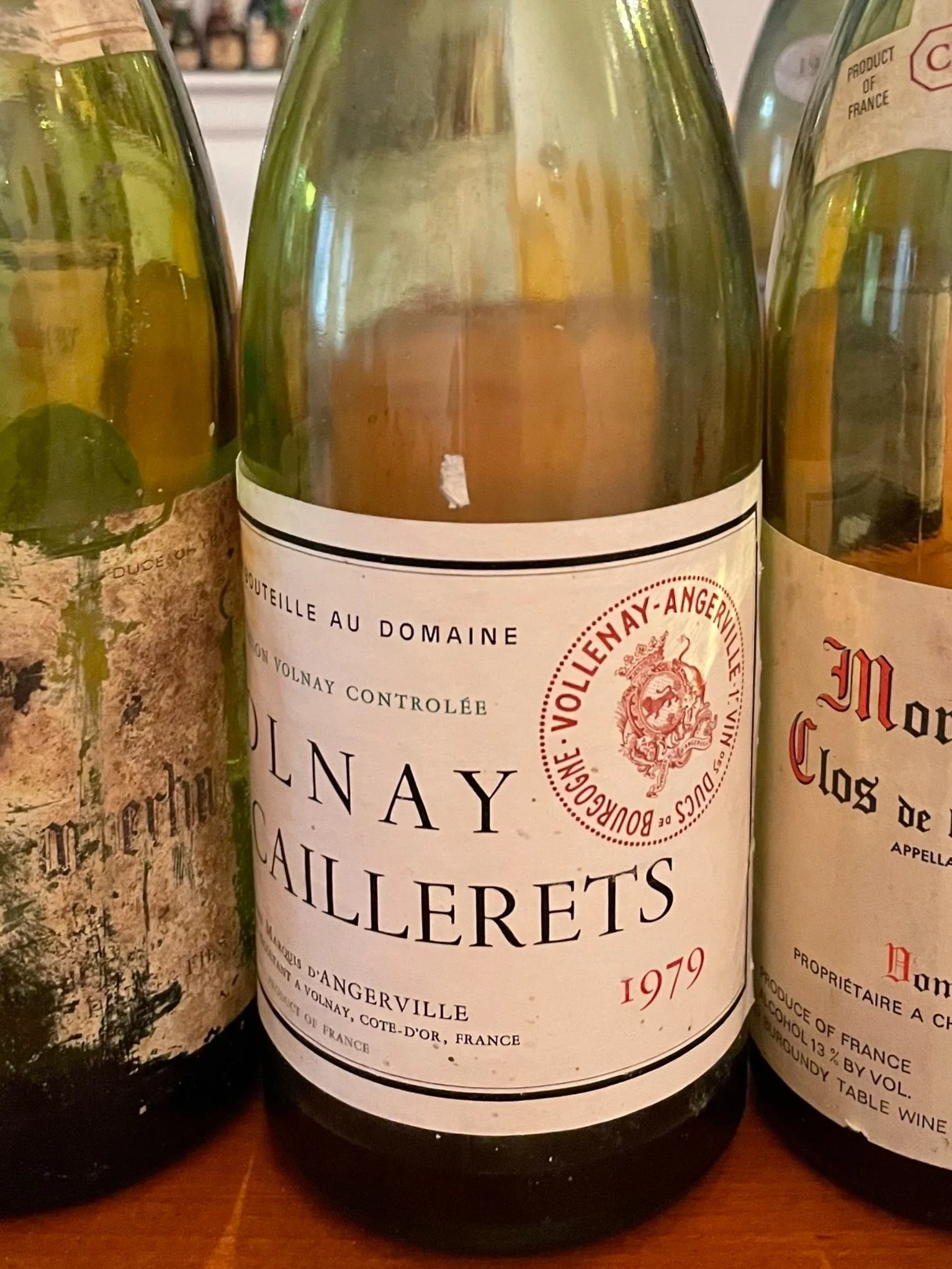
Guillaume d’Angerville, Jacques’ son, explained this character in older bottlings to me once before. He suggested that even though the bunches were destemmed, there were no vibrating tables in those days, let alone destemmers with the accuracy and efficiency we know today. So while his dad definitely destemmed the bunches, there was probably some small amount of vegetal matter that found its way into the vat, perhaps accounting for that pleasant herbaceous note…
Another tremendous bottle! Next week I’ll share one last tasting note from this magical evening, a Côte-Rôtie that over delivered.
What's Pressoir Watching?
Victoire Chabert
August 18, 2022
To continue in the series What's Pressoir is watching, I wanted to present a documentary this time.
Three Days of Glory is a must-watch for you Club Members but also Burgundy wine lovers and La Paulée attendees. Indeed, this short documentary retraces the history of Burgundy, interviews some winemakers, shows scenes of what the Paulée de Meursault is and evokes the future of the region. You will also have a glimpse of my family domaine because my uncle is interviewed, as well as Dominique Lafon, Véronique Drouhin, Thierry Violot-Guillemard and Thiébault Huber.
But first, a teaser from the trailer : click here to see the trailer.

Three Days of Glory tells the story of the world's largest wine festival in the most legendary of wine regions - known locally as Les Trois Glorieuses - including the lunch titled La Paulée in Meursault. This documentary offers a glimpse into aspects of Burgundy never before filmed. Burgundy is home to some of the most legendary wines on the planet. But it took time and hard work to get there.
You'll see the journey of several Burgundian producers, including Thiébault Huber of Domaine Huber-Verdereau in Volnay, Patrick Essa of Domaine Buisson-Charles in Meursault and Thierry Violot-Guillemard in Pommard, as they deal with April's devastating frost and the many curveballs that the 2016 vintage sent to winemakers.
A series of difficult years in the 1920s and 1930s led to the creation of events called the Three Days of Glory. This is the story of the traditional and age-old La Paulée, its origins, the sharing of fantastic wines, good times, and the winemakers of today's small estates, who faced a series of brutal years that had a real impact on their harvests.
While grappling with the complications of the present, the winemakers - as well as Burghound's Burgundy expert Allen Meadows and Director Scott Wright - reflect on their place in Burgundy's traditions as well as the role they play in the future of their families' estates.
Three days of Glory is Available for Free on Amazon Prime .

What's Pressoir Drinking?
August 17, 2022
Raj Vaidya
I had a few former colleagues over for a night of eating and drinking, and several of them were kind enough to dig very deep in their cellars to share several special bottles. What can I say, I’m a lucky guy!
The oldest bottle of the night was from one of my favorite Burgundian domaines and was the oldest bottling I’ve ever tasted from said domaine, the Bize Savigny-les-Beaune 1er Cru “Vergellesses.”

Domaine Simon Bize dates back to the phylloxera era, founded in 1890, and has been, over the last 70 odd years, one of the premier estates in Savigny. The domaine rose to great prominence beginning in the 80’s with Patrick Bize at the helm. Known for a heavy hand with whole bunch fermentation, these wines are always ethereal, not deep in color or weight but immensely deep in complexity and spice aromas. Today, Patrick’s widow Chisa makes tremendous wines of quality, and the next generation of Bizes are beginning to get involved at the domaine.
This bottle predated Patrick’s era, which began in 1972, and so little is written about the winemaking or viticulture at the time. I did note a strong sense of whole cluster fermentation aromas but the wine had more fruit than the bottles I’ve tasted from Patrick’s early days, so perhaps the percentage of stems was less in those days. Beguiling aromas of lavender and jasmine flowers dominated the nose, on the palate a distinct red cherry fruit. The fruit was intense, I could hardly believe that such an old wine could have that level of finesse and intensity at the same time. A tremendous bottle!
It was a great wine night and there are a few other bottles I want to share my experience with, so look out for a couple more tasting notes on these in the coming weeks…

What's Pressoir Drinking?
What’s pressoir drinking
By Edouard
8/11/22
Edouard Bourgeois
August 11, 2022
While getting my notes ready for the upcoming Pressoir.wine Session on the fabulous Jura wine region, I thought the timing was right to offer a brief portrait dedicated to one of the greatest Jura producers, Pierre Overnoy. I remember a recent conversation with my friend and sommelier superstar Pascaline Lepeltier where we discussed her numerous encounters with the greatest winemakers of the world. I asked her what her most memorable visit was and after a minute of reflection, she finally said: “Pierre Overnoy”. She told me about the man, the wonderful bread he had baked that and shared with her that day and how their conversation made her feel, transporting her into a delightful moment, a comfort that reminded her of childhood. Unfortunately for me, I never had a chance to meet the inspiring gentleman, but I was lucky to try his wines more than once.
Born in 1937, Pierre has been making wine his own way in the village of Pupillin for five decades. Early on, as a child, Pierre would skip school to help in his family’s vineyards or with the cows. The mischievous young boy developed an irresistible sense of humor and wit that still defines his unforgettable personality. His wisdom and perpetual desire to question everything quickly led him to reject the chemical herbicides most farmers would use in the early 1960’s. If being organic then was certainly not the norm, it was an obvious choice for Pierre. He didn’t receive formal winemaking training despite a brief attendance in the wine school of Beaune and relied more on his tastebuds than the test tubes, favoring the style of wines made by his family over the more standardized quality taught by oenologists. An important leap for him was to start making wine without the use of SO2, or any other intervention. This led him to meet the pioneers of the so-called natural wine world such as the influential Jules Chauvet and afficionado customers like the prestigious restaurateur Alain Chapel.
Pierre remains known for his kindness, generosity and open-mindedness, never short of helpful advice to younger winemakers who listen to him with the utmost respect. These disciples are now well-known and sommeliers develop great efforts to add their name onto their wine lists. Stephane Tissot, Philippe Bornard or Pascal Clairet are just a few of them.
Pierre is now retired but he has passed the baton to his longtime protégé “Manu” Houillon who became in charge of the domaine in 2001. He had started working for the domaine at age 14.
The wines with the characteristic pink label are extremely hard to find today, on occasion leading to stratospheric prices, although a few mindful restaurateurs still give the opportunity to taste these magical bottles without falling for the temptation of speculation. La Dilettante restaurant in Beaune was one of them, and Daniel and I had a fabulous bottle there a couple years back, pictured below.

This bottle was enjoyed over the course of 2 days and after being opened for that long, the wine blossomed even more.

What's Pressoir Cooking?
Justine Puaud
August 10, 2022
Peach Season
Summer is the time to bake with beautiful fruits such as peaches, apricots and nectarines. I discovered Chef Yotam Ottolenghi’s cuisine a few years ago and today I recommend his lime and rosemary peach tart.
Delicious, fresh, fragrant and juicy – it is the perfect pie for summer. The peaches are marinated with rosemary, lime juice, and lime zest before being baked in puff pastry. This recipe is very easy to make. Just make sure you plan it ahead of time, as you will need to macerate the peaches for 1-2 hours before you can bake it.
Ingredients
200 g (1 packet) all-butter puff pastry
2 limes
60 g (⅓ cup) granulated sugar
5 large firm peaches stoned and cut into 0.5 cm (0.2 inches) slices
2 large sprigs rosemary, plus ½ tbsp picked leaves
1/4 tsp cornstarch
150 g (⅔ cups) creme fraiche
Instructions
Marinate the peaches
Cut peaches in half, remove stones, and cut 0.5 cm (0.2 inches) slices.
Peel one of the limes in 7 long strips and place strips in a large bowl. Add the sugar, the juice of one lime, the peach slices and rosemary sprigs. Stir and set aside to macerate for at least 1-2 hours.
Strain the peaches through a sieve straight into a small saucepan, and set aside the rosemary. You should end up with about 60ml (¼ cup) peach syrup. Try to leave as little juice as possible on the peaches.
Chop the rosemary you just removed from the syrup and set it aside.
Prepare the creme fraîche
Mix the grated zest and a teaspoon of sugar into the creme fraiche and refrigerate until ready to serve.
Bake
Preheat the oven to 180°C (355°F). On a lightly floured work surface, roll out the pastry just under 0.3-0.4 cm (0.1 inches) thick. Line a previously buttered 24 cm (9.5 inches) tart ring or pan with the pastry.
Arrange the strained peaches in the pastry and bake for 25 minutes on the bottom rack of the oven.
Prepare the syrup
While the tart is baking, whisk the cornstarch into the reserved peach syrup. Simmer over medium-high heat until it thickens to the consistency of honey (about two minutes), then pour over the peaches. Sprinkle the chopped rosemary leaves on top and return the galette to the oven for 15 minutes, until the pastry is golden-brown and the filling bubbly.
Serve
Remove from the oven and transfer immediately to a cooling rack. Leave to cool slightly, then zest a lime onto the tart, and serve with a bowl of the lime creme fraiche on the side.


What's Pressoir Drinking? Summer Team BBQ

Every summer, Daniel is kind enough to open his home to our team for a little break in the season. In addition to the consistently excellent meal he prepares with Sally, his wife, Daniel also generously opens his cellar. This year again, the wines were superb and as you would imagine, Burgundy oriented, with a couple significant performers from the Loire and Germany.

The festivities started with the most glorious thirst quencher one can dream of on a hot humid day in Brooklyn. Notoriously cherished by Raj, the opening act was from producer Willi Schaefer, in the Mosel. We drank a Graacher Domprobst - the vineyard is planted on a southern exposed slope of slate that the Romans started identifying early on as a precious site. This is still one of the best vineyards in the region. The problem with this low alcohol, mouthwatering Riesling is always how quickly they get drunk as they are so easy and irresistibly delicious. So we moved on to another favorite of ours, Chablis. With no time to waste, we went straight to arguably the best producer in the region, Vincent Dauvissat, of course. The bottle was a 1996 Vaillons in pristine condition. Obviously drier than the German, I found it interesting to compare the minerality between the two wines, especially that smoky, flinty characteristic they share. After a few minutes, I had this revelation that the nose reminded me of one of my favorite desserts, the lemon custard and meringue tart, known in my country as tarte au citron meringuée.
We sat at the table, set up with juicy lamb chops and various grain salads, and opened a magnum of Domaine de l’Arlot Nuits-St-Georges Clos de l’Arlot 2002. Jean-Pierre de Smet, a dear friend of Daniel and more recently each one of us in the team, made that gorgeous wine. After fine tuning his winemaking skills at Domaine Dujac, Jean-Pierre started as the winemaker at Domaine de l’Arlot in 1986 and quickly built the great reputation of this Burgundy estate. Clos de l’Arlot is a vineyard solely owned by the domaine and typically planted with the oldest vines of the property. The jaw-dropping 2002 vintage and the magnum size effect made for a memorable wine moment. We all have had this experience of opening a bottle and after tasting it think, well, it is a bit shy, or muted. This Nuits-St-Georges offered the opposite experience, a cornucopia of complex fruits, both ripe and juicy, with a pitch perfect underlying minerality and more subtle black tea. It was superb, dense and deep.
As you probably know, our team likes to go back to white Burgundy when the cheese hits the table. Victoire, the newest member of our crew, kindly brought a fresh and clean bottle of Meursault Bouches Chères 2011 that her family makes. I was quite impressed with how youthful the wine showed, despite its age. You will note the spelling of the famous Premier Cru Bouchères, poetically refashioned by the producer here.

We finally closed the show with a near meditative and spiritual bottle of Clos de la Coulée de Serrant from 1980. This cult wine is a real gem for a reason. Certified organic and biodynamic since 1981, it was first planted in 1130 by Cistercian monks and has remained a vineyard since! Unapologetically rich, heady with alcohol levels soaring up to 15% plus in some years, the magic of this unique wine is its authenticity as Daniel rightfully pointed out. If you ever wondered what sommeliers mean by modern or traditional style, this is a textbook example of what old school means. No polish, no make up to impress, just the pure and raw personality of Chenin Blanc grown on the schist and quartz slope, bathed in the sun. 1980, Raj’s “vintage” did particularly well for Coulée de Serrant. The wine kept changing on the nose, oscillating between smoky, wet stone minerality and explosive exotic fruits, peach, pineapple and even mango.
We closed out with Daniel’s famous sour cherry pie, a delicious way to end the evening on a sweet note.
This was quite a night to remember, a great opportunity to literally refuel while we are getting ready for a very busy fall program!

The bottle of Rousseau was sadly corked…
News from the Vineyard
Raj Vaidya
7/26/2022
Daniel has written a nice account last week of how the vignerons in Burgundy are feeling about the ongoing season (safely described as optimistic for now, happily.) He mentions the intense rain storms of late June which happened to occur just before I arrived in Beaune for a weeklong visit, and although I missed the worst of the storms that the Côte de Nuits saw on the 22nd, I did experience the most rain I’ve ever seen that Sunday the 25th - in all my years visiting the region. This is all highly unusual for the region, that Sunday in Beaune 12mm of rain was recorded in 24 hours!
A few accounts of the rains that mostly affected the village of Gevrey seemed outlandish at first; half a meter of flooding was reported in the town center, the cellars of several vignerons had over a meter of water briefly flooding their cellars and so on. The storm was quite furious and yet by luck, there seems to only have been some spotty hail damage (below left, an example), it was mostly water, just lots of it at one time….
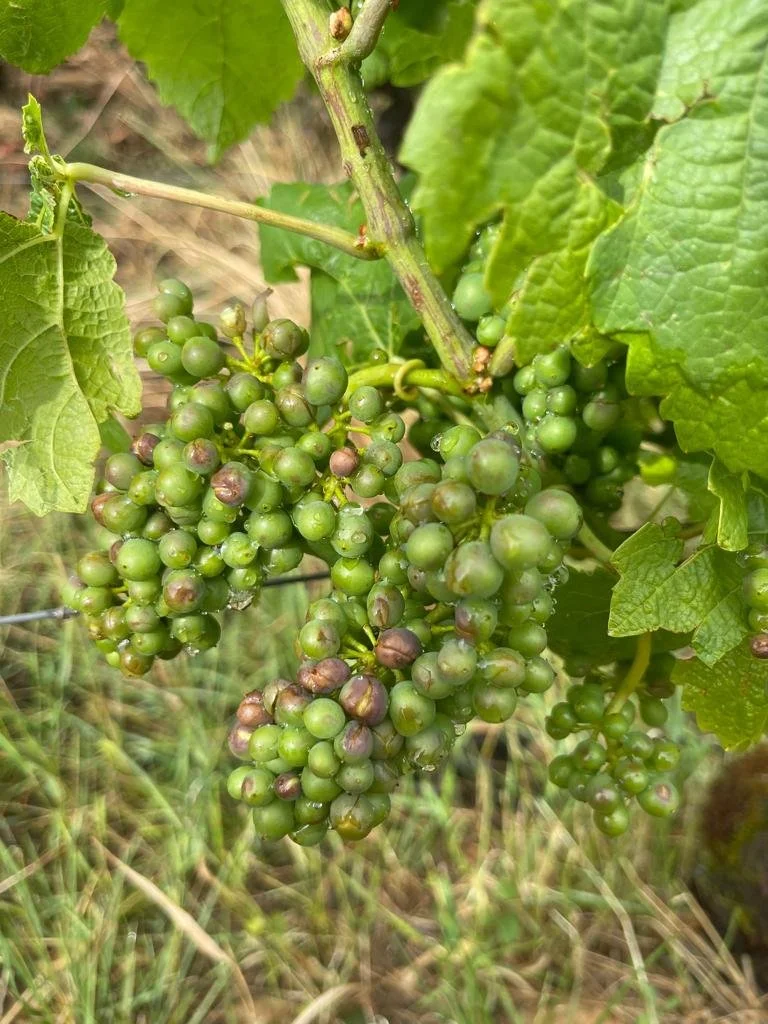
Slight hail damage in Gevrey.
Topsoil quickly finding its way down the slopes of Gevrey. This is on the Route des Grand Crus just beneath the Chambertin, above Charmes Chambertin.
The village saw 150ml of rain within about 36 hours, and for perspective, 200ml is typical for the entirety of the growing season. The storm was vicious and fast, captured in the stunning picture below from the plains around Gilly le Citeaux.

Cellars and streets filled up quickly with water, making a huge mess and logistical nightmare for winemakers.

All things considered, the aftermath was pretty mild, in that Gevrey saw very little overall hail, and though topsoil will have to be brought back to some of the vineyards on the upper slopes the vines and managed for the most part to withstand the storm. Since that Sunday’s rain following the storm on June 22nd, (touching wood!) Burgundy has seen truly ideal conditions, cooler than the heat wave of early summer and very clear without any serious amounts of rain. This has moved the vintage’s timetable up a bit, with veraison for the reds happening now and the likelihood of a very early harvest.
Hope these images and videos help paint a picture of how scary that moment of the season must have been for the producers. Photo and video credits go to Cyrielle Rousseau of Domaine Armand Rousseau, Jean-Louis Trapet of Domaine Trapet and Erwan Faiveley of Domaine Faiveley. All of these were shared kindly by Jeremy Seysses of Domaine Dujac.

What's Pressoir Eating
Daniel Johnnes
July 19, 2022
Lobster, Plain and Simple
I love to cook. In fact, I thought I wanted to be a chef before I fell in love with wine, the culture and history of wine and the winemakers. I spent several years apprenticing in NY and France before realizing my true calling was the grape.

The one dish that has always scared me was lobster. Not only because it entails killing the beast just before cooking it or killing it while cooking it but I have consistently had poor results.
My favorite way of eating it has been simply steamed or boiled, dipped in drawn butter and splashed with fresh lemon.
Somehow, I find a way to cook it too long or too short and ruin it almost every time. Last year, I asked one of Daniel’s chefs to guide me. His technique was a short boil followed by a few minutes on the grill for a smoky element. The final result was like eating a shoe recovered from a fire.
This year on Fire Island, I decided to try again by steaming three 1.5lb lobsters for about 8 minutes, draining them and cracking them open for all to join in the wrestling act. A dip of butter, a splash of lemon and a sip of Domaine Roulot, Meursault Le Porusot 2009. Et voila, a perfect, messy meal only to be topped off with a glorious sunset.


News from the Vineyard
Daniel Johnnes
July 19, 2022
Mid Summer Vineyard Tour
I make a point of getting a view of the vineyards during the summer and most often closer to harvest to get a bird’s-eye view of what challenges nature has presented. It helps inform my opinion and understanding of why the wines could be a certain way once finished.
Wine writers are famous for making premature declarations on a vintage. Based on weather patterns, crop size, projected harvest dates and similarities to previous vintages, they will often make statements such as, “vintage of the century” or “total wash out” or whatever, in order to be the first off the press with a prediction. Big predictions even before the first grapes begin to ferment!
I arrived July 8th under sunny skies and warm weather, nothing extreme. The people were happy and I heard no talk of the vineyard needing multiple treatments to fight the common oïdium, mildew, leaf roll and other ailments.
Spring and warm weather came early and with bud break and flowering uninterrupted, the predictions are for another August harvest. This one could start as early as August 20th in the Côte de Beaune.
One big difference between this vintage and other recent hot vintages such as 2018, 2019, 2020 is the amount of water the plants have received. Rainfall has been sporadic yet consistently nourishing the vines enough to avoid leaf burn and promote a healthy photosynthesis. In addition to small rainfalls, there was a big one on June 22nd that sent a scare across the Côte as it was mixed with hail that did some damage around Gevrey and other isolated communes in the Côte de Nuits.
In fact, after many years of viewing the vineyards at this time of year, I have never seen them so green. Normally, there are patches of yellow and brown but this year has been a picture perfect tableau of dark, rich green.
As they gear up for a week of near 100 degree temperatures, people are prepping for a mid-summer break before coming back mid-August to get ready for harvest.
Lots of smiles all around and plenty of crossed fingers. Not only does this one look healthy but it also looks abundant, which is desperately needed especially after the tiny crop in 2021 where quantities were down as much as 80%.

Marion Nauleau-Mugneret (left) and Lucie Teillaud-Mugneret (right) the next generation of Domaine Georges Mugneret Gibourg.

The perfect duo, Clotilde and her father Frédéric Lafarge of Domaine Michel Lafarge

What's Pressoir cooking?
Daniel Johnnes
July 19, 2022
Tian de Legumes - a Lovely Summer Dish
The most perfect time of year for fresh local fruit and vegetable is upon us right now.
A walk through the Brooklyn Grand Army Plaza market last weekend inspired me to make a Provencal dish that is both beautiful to look at and eat: a tian de legumes.
The tian is a baked dish of eggplant, zucchini, yellow squash, tomato, fennel, red pepper,onions, garlic and herbs.


It is incredibly easy to make. Slice the vegetables about the same thickness. Then sautée onions, garlic, red pepper and fennel until soft. Preheat oven to 350 degrees and start making a ring in a pie plate by alternating everything until the ring is closed. Spinkle thyme and olive oil over the dish, add salt and pepper and bake in the oven for about an hour.
Voila.
We drank a delicious rosé with this one.

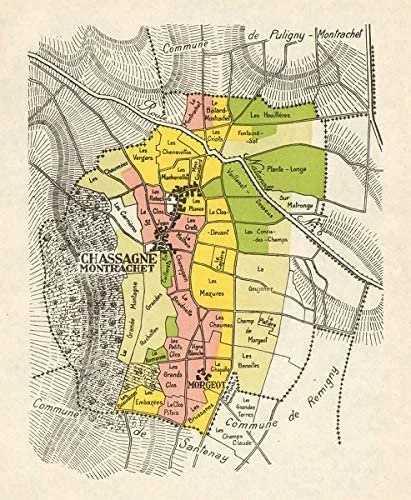
Chassagne-Montrachet - a Winemaker's View
by Victoire Chabert
July 15, 2022

Victoire Chabert
July 14, 2022
After discovering an unexpected and splendid Chassagne-Montrachet 1er Cru Abbaye de Morgeot 2017 of Olivier Leflaive at our early Bastille Day Apéro, I wanted to dive a bit deeper into the appellation, so I once again turned to the writings of my uncle Patrick Essa, the winemaker at our family Domaine Buisson-Charles. It is somewhat technical but I hope you enjoy as much as did!
________
Chassagne-Montrachet
by Patrick Essa
The village of Chassagne could undoubtedly be designated as "the" archetypal model of a wine-growing commune, so much so that it breathes the vine and the wine. Its scattered houses almost all have a view on the vineyard, its tortured plan seems to have been dictated by the cultivation imperatives, its narrow paths and its streets which all end at the foot of the hillsides... In Chassagne, man seems to take a back seat to the land that bears the vintages and never hesitates to collect himself before working it. Entering the "world" of Chassagne is in many ways like entering a religion, one must accept that here the permanence of culture and know-how are always present inside the bottles.
This extensive finage, enclosed between Santenay to the South, Saint Aubin to the North-West and Puligny to the North-East, measures a little over 300 hectares. A quick look at its morpho-geology reveals a combe that cuts the vineyard in two at the level of the Grand Cru sector and a regular slope facing due east that rises more steeply on the top of the southern slope. The last commune of the Côte d'Or south of the Cote de Beaune, it is directly under the influence of the Great Fault which collapsed the base of the Bathonian, more calcareous, at the level of the top of the Argovian marls, and that of the Synclinal of Volnay (see the analysis of these phenomena in the texts evoking the Côté Chalonnaise), which brings up the substrata of the Lias and the hard limestones of the Jurassic. For these reasons the cultivation of Pinot Noir vines and the extraction of stone are naturally present in these regions. For a long time the commune was synonymous with almost exclusive red wines which were only completed by a few zones of Chardonnays identified for a long time and limited on the northern slope near Puligny and in the heights of the sector known as "la Montagne" between the finages of Saint Aubin in the North and Santenay in the South.
I defend here the obvious idea that positions this fabulous terroir as one of the best for the cultivation of Pinot Noir outside the sectors historically devoted to Chardonnay. And I will be quite severe with the "white" plantations that colonize the lower, more clayey areas of the hillside as well as the sector that stretches from "Maltroie" to the various crus of the hamlet of "Morgeot". The magical name of Montrachet has been used to produce excellent white wines, always impeccably vinified, while reducing the reds to a small portion that hardly fits in with the geology of the place. A simple market logic. But I believe that some producers of the vineyard are aware of this, and it is obvious that things will evolve in a fairer way in the future.
The "Village" appellation zone: this vast zone extends under the first growths and measures more than 120 hectares. If we exclude the sector of vines contiguous to that of Puligny-Montrachet, it should be entirely devoted to the production of bouqueted and fine Pinot Noirs combining greediness and accessibility in youth. These gently sloping soils are fairly clayey and sticky and produce wines that can become heavy if they are cut too late. Fruity wines, quite full and enveloping, they can be interesting in the best places such as Les Masures, La Bergerie, Les Chênes, La Canière, le Clos Devant and les Chaumes.
Much more interesting is the northern part of these villages because it is inclined towards the south or on a small flat area - En Encégnière - the soil is stonier and clearer and the wines here have a tension that clearly ranks them among the best villages of Beaune for Chardonnay. The best lieu-dit is undoubtedly Blanchot Dessous along with the highly regarded Houillères.
There is also a cooler and more chalky upper zone which includes Pimont, Parterre du Clos Saint Jean, Combards Dessus and Peux Bois. This area is not very large, but it produces lively wines with a fine texture that are excellent in an early year and that are frequently blended with the lower ones to bring their natural acidity.
Several sectors mark the finage of the Chassagne premiers crus and all are not at the same level of excellence if we consider their nature associated with the "Chassagne" character.
Unquestionably the best are located in the extension of the top of the village of Chassagne from the Caillerets to the Clos Pitois which touches Santenay. This area of altitude oriented towards the east, in full hillside, higher, very sloping, stony and marked by marly and limestone banks gives dazzling wines which all can be considered as being among the best of the Côte des Blancs. Caillerets, Virondot, Dessus des Fairendes, Romanée, Grandes Ruchottes, Baudines are high-flying crus which can acquire a finesse and energy of great breed and which often prove to be finer and a little less ample than the middle crus of Meursault or Puligny.
A second block touches the northern Grand Cru zone and includes Blanchots Dessus, Dents de Chiens, En Remilly and the very small and very famous Vide Bourse which is lower down under Bâtard. More typical of the Puligny character with those characteristic white fruit notes, these are four very high level wines which unfortunately are extremely rare. They do not, however, have the dimension of the Grands Crus as they are ready to drink a little earlier and have less length.
The third block goes from the Saint Aubin vineyard to the northwest and ends against the original Clos Saint Jean. Focus on the very fine Vergers et Chaumées and the Saint Jean from the Rebichet - but admittedly you have to look! - because they are the most elegant crus of the commune and often have a happy accessibility in youth. The redder soils, less stony at the bottom, can give first class reds in Macherelles.
Clos Saint Jean and Maltroie are still planted with Pinot Noir for a large part and give some of the most sensual reds of the Côte de Beaune. I will talk about this in detail below.
Finally, the Morgeot sector, lower down the hillside, forming a sort of croup, which is today mostly planted with white grapes, should still produce exquisite reds as is the case in the sub-climate of Cardeuse, En Francemont, Boudriotte or at Roquemaure. This great red terroir goes hand in hand with the best Volnay and Pommard and is dormant as the reds here are becoming scarce.
The Grand Crus:
The Grand Cru "Montrachet" produces some of the greatest dry white wines of Burgundy and is probably the one that nowadays sells for the highest price, so much is its small surface area courted by winemakers for its multi-secular reputation. The Burgundians have always placed it a notch above their other white wines by designating it as the Grand Cru A of the Côte d'Or, its standard value in a way.
However, drinking a Montrachet at maturity has become a challenge because the 30,000 or so bottles produced each year are all reserved in advance by drinkers who do not always share their fortune with a fine knowledge of the region's whites and their potential for evolution.
The few examples I have in my cellar are always opened after a prelude that mixes two finages and continues with other great wines. I think it is important to perceive the obvious vinous carcass of this vintage so far from the white archetypes highlighted today. Often very rich, not very acidic and with a viscous texture, it has - a bit like a Rangen in Alsace - a staggering formal power that brings it closer? to the level of its matter, to the granularity of a red wine.
Produced on 8 hectares and shared by the villages of Chassagne and Puligny-Montrachet, it is marked by three distinct zones. The first, on the Puligny side, faces the east, is not very steep and is composed of a brown/red clay-limestone substrate. It gives the most balanced, fine and sensual wines of the cru. The second one, which has the same substratum on the side of Chassagne, slopes southwards and is thus a little more sunny and early, it gives slightly more opulent and intense wines. Finally, a small area included late in the cru and located on Chassagne, is placed above the cru to the south forming small terraced enclosures, these are "les dents de chiens", the soil is a little more stony and the character of the wine approaches somewhat the elegance of the nearby Chevalier. Let's be careful though, as the stylistic differences are tenuous. One property combines the latter with the Chassagne part (Prieur) and only the Colin and Amiot estates produce "pure" Dents de Chiens.
Criots-Bâtard-Montrachet is the smallest of the Burgundian Grand Cru whites if we exclude the confidential production of the white Musigny of the Comte de Vogüe. A small piece of land looking south on a narrow slope, located under the Bâtard de Chassagne - this magical rectangle was conquered "grand cru" with great difficulty at the time of the AOC classification in the first third of the 20th century.
It could have seen its western neighbor "Blanchots Dessus" supplant it because it is under the Montrachet and its exposure is just as qualitative. A bit more slope and surface area must have been to its advantage and its extreme finesse finally made it a winner.
The vineyard measures 1.57 ha, it is rectangular and its land is quite homogeneous even if the slope is slightly more marked to the west. Made of a limestone substratum a little more marked by clays than the other two Bâtards, the cru delivers wines with a surprising sensuality because it is an early solar zone which types the wines on a certain softness of texture at the same time as on a viscosity more Murisaltian than "Montrachet".
But let's not be mistaken, it has the dimension of a Grand Cru when its yield is measured and when it can thus draw from its soil a telluric energy as original as terribly seductive when young. It is with "Bienvenues" the most accessible young vintage of the Montrachet sphere and I must admit to particularly appreciating its subtle floral notes which sometimes bring it closer to the balance of Genevrières du Dessous or Charmes dessus.
A little less powerful and a little more spicy than its neighbors, it bewitches with its natural class. This small entity delivers vintages that I find quite regular and that do not seem to stand out according to their location. Intuitively, I perceive a little more tension if we move towards the east and more power and robustness if we go towards the west... But vinification, as everywhere, influences these general trends.
Bâtard-Montrachet: A sought-after wine that fetches a high price, the powerful Bâtard seems to concentrate all the class of Montrachet wines in its name. Expensive, not easy to find, always dominant, it is without question one of the most powerful and robust wines of the Chardonnay planet. And rightly so.
The 4 hectares located on Chassagne look south or form an almost flat area on the side of the Bâtard de Puligny. More precocious, set on slightly clearer and stony soils, this zone delivers the most sensual and refined wines of the climate with a ripe note of supreme elegance that is reminiscent of the great Montrachet next door with even more density. I believe this is the most qualitative Grand Cru portion of Chassagne with its Montrachet and probably also the most personal as a wine from this "Bâtard du Sud" is always a taste sensation.
Some first growths in review:
Les Caillerets: Between the Morgeot-Fairendes and Clos Saint Jean first growths, the Caillerets climate produces some of the best white wines of the Chassagne commune. Its clay-limestone soil, ideally oriented towards the east on a moderate to steep slope at the top, is undoubtedly one of the most qualitative substrates of the commune. 10 ha 60 ares in size, the original cru contiguous to the Fairendes and above the Champs Gains is completed by three sub-places that clearly resemble it: "Vigne Derrière", "Combards" and "Chassagne". The first one is the natural extension of the Caillerets, while the two others are a little higher on the hillside, in line with the village houses. Combard is a little colder and gives more incisive and tense wines that must generally be cut later. It is shared between the Coffinet and Gagnard estates.
I like this wine for its personality close to the great Montrachet which designates it as its spiritual son. It is a sappy, full and dense wine that absolutely must age to reveal itself. It is today in the top group of the crus of the Côte des Blancs and as its owners often have beautiful parcels, it is not the one that sells at the highest prices... a bargain in short! More precocious than the Virondot located above it, it is also lucky to have many excellent winemakers in its ranks.
Note the existence of a Clos du Cailleret which belongs to Vincent Girardin. Located against the first houses, it is included in the place known as "Vigne Derrière" and is surrounded by a wall with a beautiful stone portal.
Le Clos Saint Jean: is located in the upper central part of the Chassagne-Montrachet area. Historically renowned for the excellence of its fine and racy red wines, it is now available in both colors with equal pleasure. The original Clos Saint Jean, which is of modest size (about 1 hectare, owned by the Pillot and Morey-Coffinet families) includes - as is customary in this commune - a few other climates which are very close to it and which in no way spoil its high quality. Thus, a part of the "Chassagne" and the whole of the Rebichets can claim this prestigious patronymic.
As we have seen, the "rouquins" (translate "red hair") of Chassagne are wines of a rare and underestimated quality. These Pinot wines can be as delicate as some of the Côte de Nuits wines because the substratum on which they rest strongly resembles them. Let's not forget that in some places in Meursault and especially here in Chassagne, we see the Comblanchien limestone resurfacing, which strongly marks the surface strata of the Nuits and gives them that inimitable texture and energy. For a long time, Boudriotte and Clos Saint Jean were sold at a higher price in red than most of the Côtes de Beaune, with a peak in the middle of the 19th century when they were compared in quality to Vougeot and Chambertin themselves in the minds of the established wine merchants. Read again the works of Lavalle and Courtépée on this subject.
Even today I am not surprised by this prestigious "cousinhood" because when they are matured with the ambition of the best vintages, these wines can be among the best that the Côte de Beaune produces. I even admit that they seem to me to have an "even greater" potential when they are made from Pinot Noir. The market prefers them in white because they are good, the name is beautiful, sounds good in all languages and there is nothing to do with Montrachet on the "jacket" the wine lover thinks of a clear wine. I am a little saddened by this, but I bow to the choice of the producers who know all this well anyway!
There is no lack of good producers in this elite climate. I would mention in red the domaines Lamy-Pillot, Jean-Marc Pillot, Paul Pillot and Morey-Coffinet and in white Picard and Guy Amiot. But there are many variations of this cru that might require your attention. One of the most homogeneous crus of the commune without any doubt.
Chenevottes: is a cru which measures nearly 11 hectares and which, in spite of its size, remains little known to wine lovers. However, it has a great advantage because it faces Montrachet itself and is just at the entrance of the village when you come from Puligny-Montrachet and cross the national road to get there. It has undoubtedly benefited from the local habit of grouping distinct climats together to create a coherent and more representative unified entity. It is made up of three areas facing due east on gently sloping marl-limestone soils: the Bondues, which form the lower part of the cru in the shape of a triangle, the Commes, which border the national road in a narrow strip of clay soil, and the Chenevottes proper, which start at the Bondues and end at the Pasquelles and the northern edge of the Vergers. In these three sectors the wines express themselves in a rather aromatic and fine way with an affirmed delicacy which confines the wine in an elegant register that I appreciate very much. Often underestimated by amateurs and producers, it is nevertheless an excellent and regular bottle.
La Romanée: A small high altitude vineyard located in the north of the Chassagne area, La Romanée is without doubt one of the most qualitative vineyards of the commune, like the Grands Ruchottes, Farendes, Caillerets or Champs Gains and Blanchots above. It also owes to its famous name its particular "aura" and its relative added value compared to its peers. However, it is above all a terroir that has an undeniable personality. It is included in a large group called Grande Montagne, but this one is only rarely used on the bottles.
Nestled on a fairly steep slope at the top of the hillside, it overlooks the small clos and the Tête du clos, with a clear view to the east. Its brown limestone soil, rather shallow and mixed with pebbles, dries out very quickly and is quite precocious despite its high position. This gives the wines an energetic and nervous nature and above all an unspeakable finesse of texture which is reminiscent of the Bouchères de Meursault and even the Chevalier Montrachet. It is undeniably destined for lovers of chiseled and refined white wines who know how to wait a few years to taste bottles perfectly polished by a happy maturation under glass. I often taste it with intense pleasure when it is more than five years old and starts to melt its fiery nature by asserting superb floral aromas tended by an almost saline underlying line, but without any excess.
Measuring just over 4 hectares, it is not very fragmented and five owners share its sought-after production. All of them produce high quality wines and if they differ from each other by the character of the vinification, the time of harvest or even the plant material and the locations considered, they have a unity of form that is extremely rare at this level. Tasting a Romanée is therefore always a moment of refinement which undoubtedly places this parcel among the 10 best first growths of the Côte des blancs.
General characteristics of the producers whose wines I have tasted lately (2005/2015):
Château de la Maltroye: I have tasted mostly old vintages from this house that produced very classic wines until about 10 years ago. I remember an 85 and an 89 with an impressive breed, very close to the terroir with a straight profile and a very nice substance.
Morey Coffinet: The largest owner (80 ares) produces a sparkling wine of fullness on a powerful body and assertive white fruit aromas. Perfectly ripe and quite accessible by its tension in youth. It is really of very high level.
Vincent Dancer: The wines here are of a rare elegance, of a very right maturity and chiseled. The last vintages are simply extraordinary in their concentration and race.
The Paul Pillot estate is the holder of very subtle wines, not very exuberant in youth but with a strong capacity for ageing. Always very clear, woody without excess and of a school purity, they are undoubtedly intended for the stylists who like the smoothness.
-By Patrick Essa, November 2021

Recap - Chartogne-Taillet Dinner
by Edouard Bourgeois
July 14, 2022
Edouard Bourgeois
July 14, 2022
Shortly after he took over the family business at age 23, Alexandre Chartogne became one of the elite Champagne growers, focusing on single vineyard cuvées that reflect terroirs with outstanding accuracy. After he interned at famed Domaine Jacques Selosse, then under the guidance of grand master Anselme, he embraced the complex (to say the least) philosophy of this guru who naturally became his mentor. Testing various vessels from concrete eggs to used barrels from his friends in Burgundy, Alexandre makes it a point to work in the most traditional way possible. While he doesn’t care about an organic certification, his farming is recognized as a model of environmental awareness and understanding of the terroir.
Merfy, the small village where he and his ancestors have been growing vines since the late 15th century, is not the most famous. Yet thanks to Chartogne’s hard labor, this commune in the Northern Montagne de Reims has been revealed through his single cuvées that savvy sommeliers around the world strive to adorn their cherished wine list with.

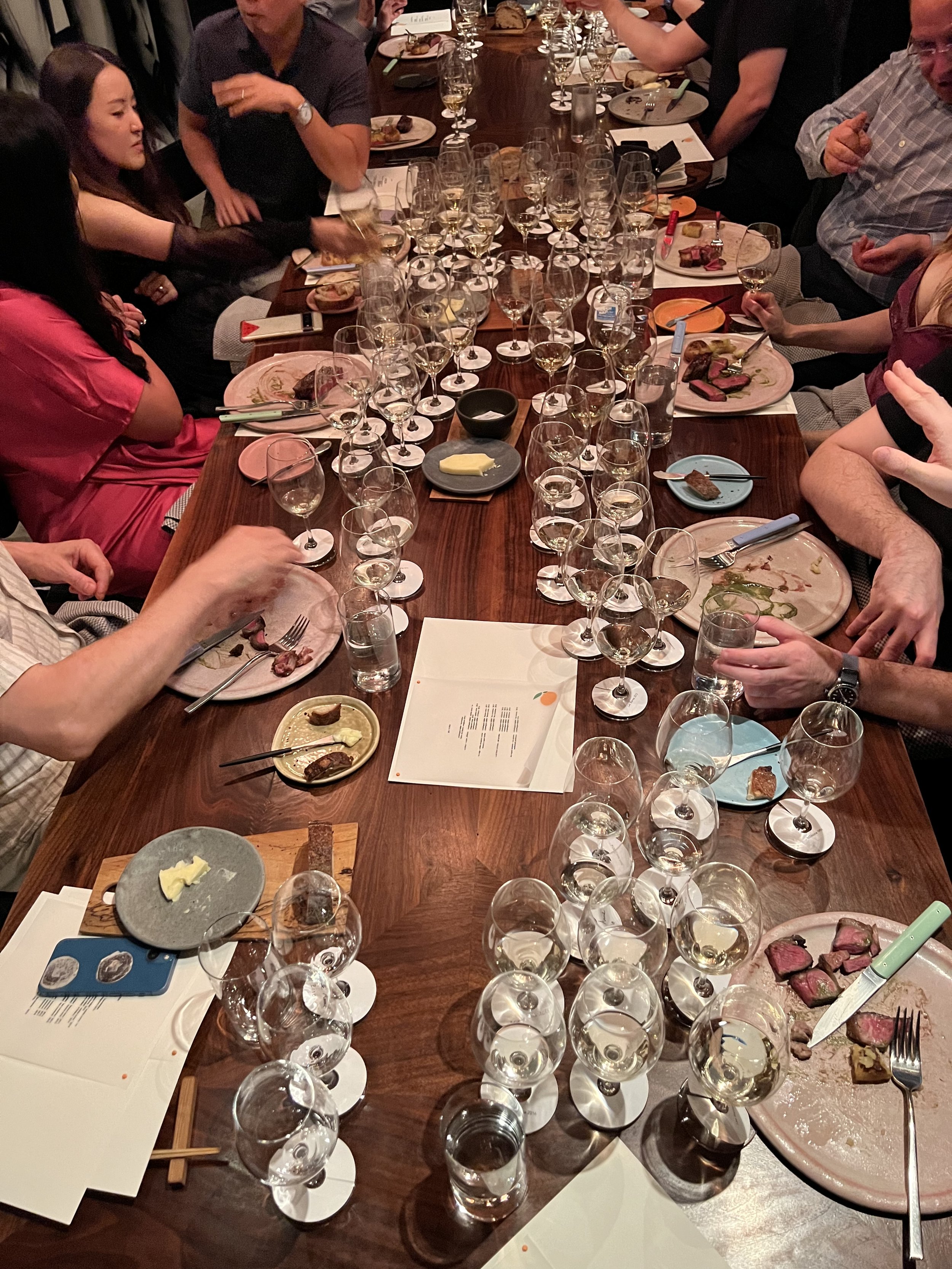
The expertly prepared cuisine of Momofuku Ko paired magically with these fine Champagnes.
Here are my notes:
Opening with a glass of “Heurtebise” for the “welcome glass”, this cuvée, made entirely from Chardonnay from the 2016 harvest, delivered exquisite freshness.
Festivities continued with a flight of two vintages of the blended cuvée “Sainte-Anne”. 2014 offered mouth-watering acidity with irresistible shortbread and pastry aromatics, while the 2010 vintage, served out of a magnum, seemed creamier and extremely refined. We closed that flight with “Saint-Thierry” 2016, a blanc de noirs loaded with red fruit and spices.
We moved on to the second flight with two Pinot Meunier cuvées from the sandy site of “Beaux-Sens” from 2011 and 2013. Note that this cuvée was only produced in these two vintages and also 2014. Hazelnut was the unanimously chosen flavor profile to describe these two wines. I did find that the 2011 expectedly showed the vegetal character of that difficult vintage, with notes of green asparagus. The 2013 appeared much sweeter. Two other wines were poured in parallel: “Couarres” 2017 and 2010. While the young and solar 2017 exploded with energy and panache, the 2010 revealed a hint of oxidation, tertiary aromas reminiscent of mushroom and forest floor. “Couarres” is a rich clay site planted with a blend of Pinot Noir and Chardonnay. The final proportion in the wine depends on the vintage but tends to be equal parts.
Ko’s must-have fried chicken was partnered with a vertical of “Orizeaux”. This pure Pinot Noir cuvée is truly magical. Planted in 1970 on a mount that is both exposed south and north tends to produce an atypically rich wine for the village. Alexandre talks at length about the importance of working with old vines so they can dig deep to reach the chalk. In his words, the plant needs at least 15 year of age to go through the thick top layer of sand and extract the complex DNA of the terroir. “Orizeaux” 2016 was gorgeous, once again bursting with small red fruit aromas. 2012 was marked by a firm acidity and I was happily surprised with the 2011. Its complex minerality made me forget the quite unpleasant green notes the vintage often gives. Great job!
Finally, we ended on a high note with the last three wines. The oldest cuvée of the night, also the only one Alexandre Chartogne didn’t make (he was 13 years old then) was a 1996 vintage. Despite my research, I couldn’t find any information on this wine. I found it to be quite flashy and with a strong personality but quickly fading. It was not the wine of the night for anyone but certainly an interesting comparison of style. The wine of the night may have been the superb “Les Barres” 2015 which in my notes received the three-letter adjective “wow”. The ungrafted Pinot Noir from that site was planted in 1952 and clearly had the shoulders to match the juicy strip loin we served with it. It had notes of earl grey and almost a red Burgundy quality to it. Truly memorable. Finally, we went back to Orizeaux with the 2010 vintage. It appeared much fresher than the “Couarres” from the same year, served earlier that night. Although made entirely from Pinot Noir, I found aromatic descriptors I would usually attribute to a white wine such as “tarte au citron meringuée”, a shortened pastry base filled with lemon curd and topped with meringue. The acidity was piercing through a delicious, sweet core of exotic fruit.



News from the Vineyard - Domaine Jean-Louis Chave
by Raj Vaidya
July 7, 2022
I’ve been visiting Jean-Louis Chave to taste his wines for well over a decade now, and it is always a magical experience; the wines are, of course, spectacular, but spending time with him and learning from him is at least as important and pleasurable as the great bottles he opens. When I first visited in the beginning of the last decade, he took me to see the vines he was planting in Le Chalet, a hillside which had last been planted pre-phylloxera and which he acquired in the late 90’s. He cleared a dense forest that had taken over the Roman era terraces all over the hillside, built roads to access the top and then started planting vines from the top terraces working his way towards the bottom. It has been an epic task which he began in 1999, and as of this past spring, he finally has finished planting the hillside. I walked the vineyard with him last Monday morning and wanted to share some of the photos and stories he told me…
Jean-Louis describes how his team plows the soil in such steep terrain.
In the short clip above he explains how plowing the soil is a two person job: one controls a winch (effectively a machine which pulls a wire connected to the plow) at the top of the row and the other directs the plow uphill as the wire pulls it uphill. Extremely time consuming, and very difficult work! The picture below, featuring Jean-Louis and the scholars I was hosting via our Sommelier Scholarship Fund, illustrates just how steep the vineyard is…


You can see the terracing work that has gone into this project involves stone walls, akin to what the Romans would have built, complete with nooks carved into them by the masons which give local fauna a place to nest. Jean-Louis believes it is vital that the vineyard has a strong biodiversity, as monoculture is something he sees as unnatural and out of balance otherwise.
Each section of vines has been planted after the terraces and walls have been completed, beginning in the spring of ‘99. This shot gives a good sense of the diversity of exposures on this hill also, adding to the complex nature of the wines produced from here. Younger parcels are all going into the J.L. Chave Séléctions bottling, meaning that this 22 year endeavor has mostly produced a fairly inexpensive wine, a great value indeed!
At the foot of the Chalet hill, close to the Rhône river but directly beneath the valley of which Chalet sits at the edge is the Clos Florentin vineyard and garden. This property was purchased with the Chalet hill and used to be contiguous and planted to the vine in Roman times as well, but unlike the hillsides which were abandoned post phylloxera this vineyard was continued by the previous ownership, and so has the benefit of a lot of old (100 plus) year old vines. It is from here that Jean-Louis selects his ‘massale’ vine genetics to plant in all his vineyards, especially the Chalet. He also has redeveloped the gardens on the property to promote the effects of biodiversity. Below, a few pictures will give you a bit of a window into this magical place…

Extremely old vines in the Clos Florentin, which Jean-Louis starting bottling separately in 2016. The hill of Le Chalet is in the backdrop.
Giant artichoke flowers!

Dahlia in full bloom

Lots of dahlias!

What's Pressoir Drinking - Domaine Dureuil-Janthial
July 6, 2022
Justine Puaud
The Côte Chalonnaise
I don’t think we disagree on this - Burgundy is getting expensive… It actually gives us the opportunity to travel a bit further and make great discoveries like delicious Epineuil from the Côte Chablisienne, juicy Gamay from Beaujolais and fantastic Chardonnay from the Côte Chalonnaise and the Mâconnais.
Long in the shadow of the Côtes de Nuits and the Côte de Beaune, the Côte Chalonnaise has become a very beautiful ‘outsider’ which is worth the detour from all points of view.

I recently discovered the well-established Domaine Dureuil-Janthial with my husband. The first time it was at Eli Zabar on the Upper East Side during a blind tasting. It was a Rully village 2017. We then started to talk about that domaine with our wine friends and we quickly realized this is a domaine we shouldn’t talk about too much or soon we won’t be able to afford their wines.
At Domaine Dureuil-Janthial, all the wines are vinified with the same high standards and a meticulousness that not many domaines use. Céline and Vincent Dureuil are supporters of healthy viticulture and received organic certification from 2009 to 2016. From old vines and matured for a long time, the wines are homogeneous and maintain a very high level, with a real ability to age in the cellar.
The Rully is appreciated for its sharp, digestible and refined appearance. Maizières delivers a ripe and concentrated whole, all underlined with a very well-balanced woodiness. It paired perfect with the veal and the morels. It was a very nice birthday treat!