Sommelier Scholarship trip to Champagne - Part I
by Max Goldberg Liu
June 4, 2026
Sommelier Scholarship
The Sommelier Scholarship Fund is our non-profit that offers educational travel experiences to rising wine professionals, with the goal of furthering wine culture in the US through the profession of the sommelier.
This initiative is near and dear to our hearts as a way of giving back to the sommelier community. Visiting the regions and winemakers plays such a key role in wine education, and as access becomes harder and harder, these trips offer an opportunity to young, driven sommeliers that we hope will offer more fuel to a lifelong passion for the great wines of the world as well as the terroirs and personalities behind them.
I was thrilled to help lead this trip along with Nikita, and we were privileged to be joined by our co-founder of La Fête du Champagne, Peter Liem, who is probably the number one person in the world that you would most want to guide you through Champagne. His expertise and depth of relationships in the region are unrivaled, which has helped make La Fête so successful over the years, but this week our travel group was the beneficiary of his knowledge.
This trip’s scholars were:
Dora Grossman-Weir - Stars, New York, NY
Adam Hopkins - Nella Kitchen, S.Y. Kitchen, Stica, Santa Ynez, CA
Taylor Weston - Bōm, New York, NY
Amy Wright - SAGA, New York, NY
We landed in Paris on Sunday, May 24 and headed straight to Epernay to pick up Peter from his home (he is the only Champagne critic to live most of the year in the region). A quick trip up to the village of Hautvillers was a great first stop in Champagne - both symbolically, as it was the home of the legendary Dom Pérignon who is often (erroneously) credited with “discovering” sparkling wine, and educationally, as we immediately found an exposed wall of Champagne’s iconic chalk and a great vantage point to orient ourselves in the region.
After a lovely lunch at L’eurasienne in Epernay (perhaps the only restaurant in France where you can get authentic Vietnamese bùn chà and classic Neopolitan pizza with a great selection of grower Champagne), we headed down to Troyes in the Aube subregion of Champagne.
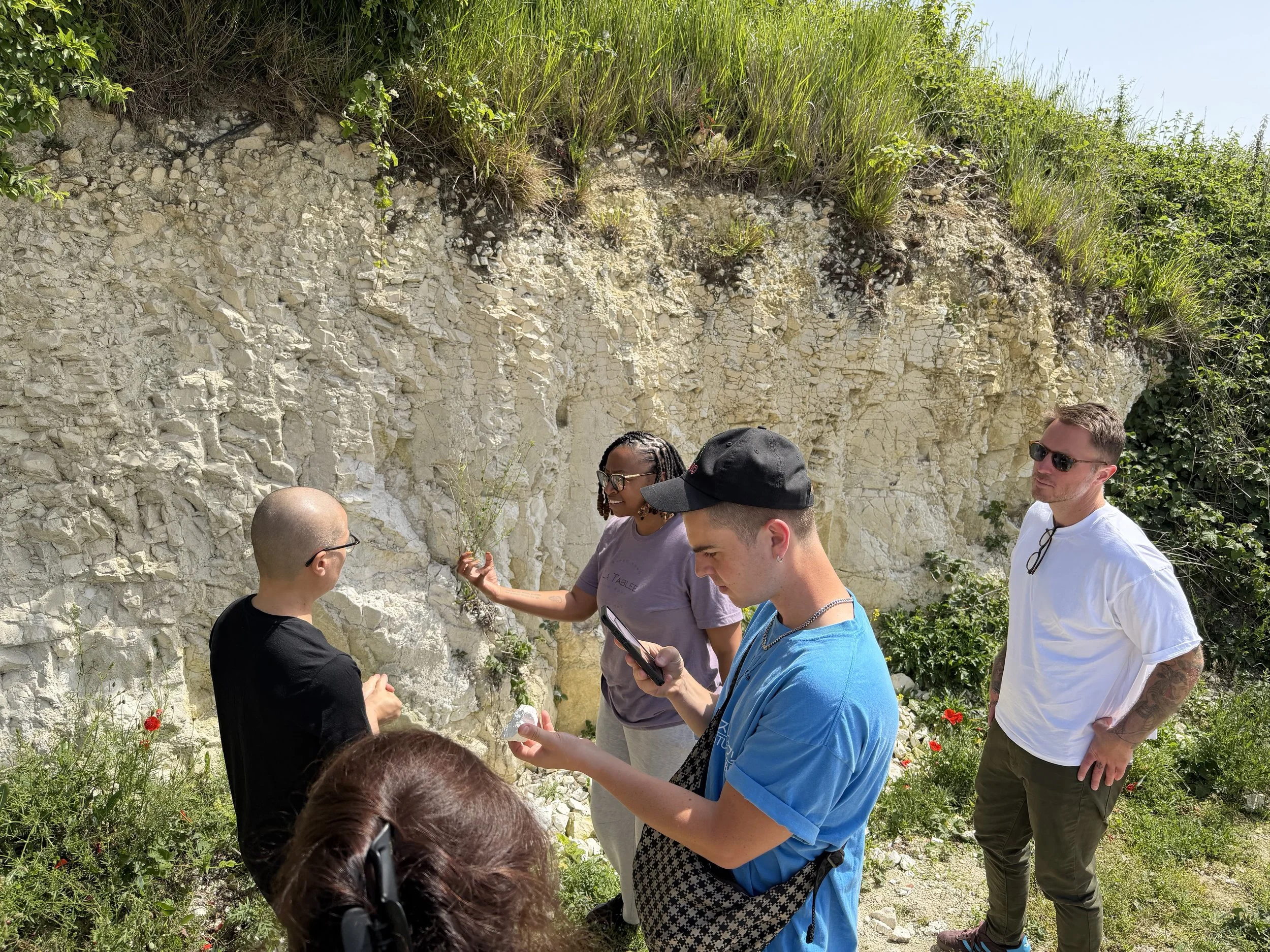
A wall of chalk in Hautvillers
Day 1 - Côte des Bars
The Côte des Bars is the southernmost part of the Champagne wine region, southeast of the departmental capital of Troyes. Around 100 miles south of Reims, it’s actually closer to Chablis than to the other parts of Champagne. The terroir follows suit - rather than chalk, clay, and other soils, the Côte des Bars is dominated by Kimmeridgian and Portlandian limestone, again just like Chablis, although here the main grape variety planted is Pinot Noir, not Chardonnay.
The area has a long history of growing and supplying grapes to houses in the north but was treated for a very long time as a second class region. At the beginning of the 20th century, the Marne (the northern part of Champagne) was dealing with an ongoing issue of grapes from outside the region being used for wine production and labeled as Champagne. The desire to strictly define the region, however, led to the exclusion of the Aube from the official classification in 1908, greatly upsetting local growers and in some cases causing violent riots. A “compromise” in 1911 classified the Aube as Champagne deuxième zone (“second Champagne zone”). It was not until 1927 that the Aube was recognized as a full part of the appellation, and the region still flaunts its proud individuality.
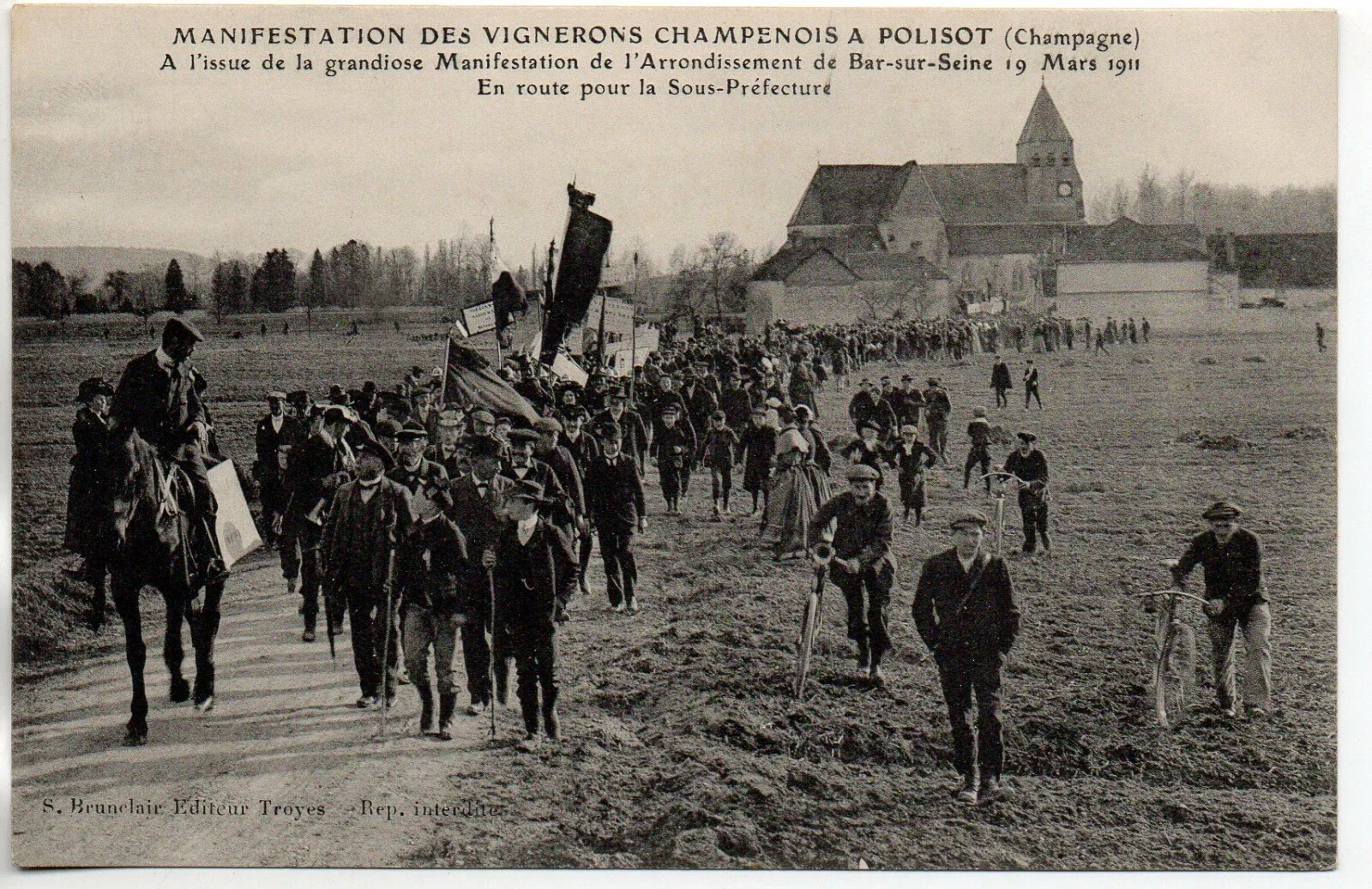
Winegrowers in the village of Polisot (where Marie-Courtin is located) head to the local government building in 1911 to protest the Aube’s second class citizenship in Champagne. Dominique Moreau has a copy of this photo in her tasting room.
The wines are usually considered to have a roundness and fruitiness to them that contrasts with the more angular and chiseled Champagnes of the north. That perception was challenged by the two growers we visited, although it should be noted that their wines are rather atypical for the region!
Pierre Gerbais
We began the day with Aurélien Gerbais at his 18-hectare family estate in Celles-sur-Ource. Contemplative and soft-spoken, Aurélien did much of his training in Burgundy, including with Olivier Lamy, whom he refers to as his “spiritual father.”
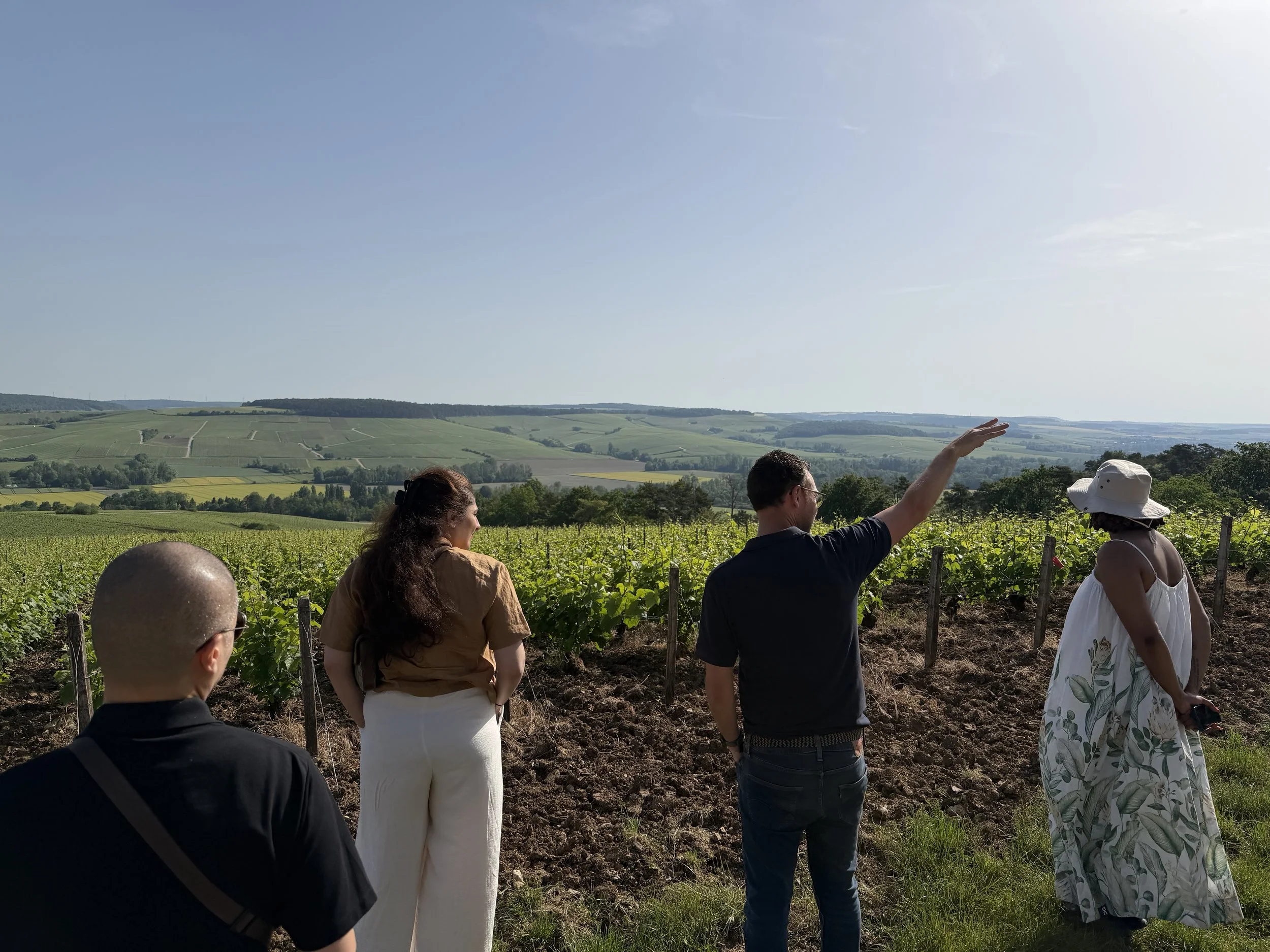
Aurélien’s vines are on slopes on either side of the east-west flowing Ource river. Historically, the south-facing slopes were more desirable as they would more reliably ripen every year. However, Aurélien is grateful that his family acquired a number of north-facing parcels as well - in modern times, these cooler plots are proving to offer more restraint and balance even in the hottest weather.
Like in Chablis, the mid-slope is where you find the Kimmeridgian soil, while the top has the Portlandian. Aurélien compares the effects of the soil on the wine to the shape of the rocks themselves. Portlandian is harder and more angular, while Kimmeridgian is more curvaceous and supple.
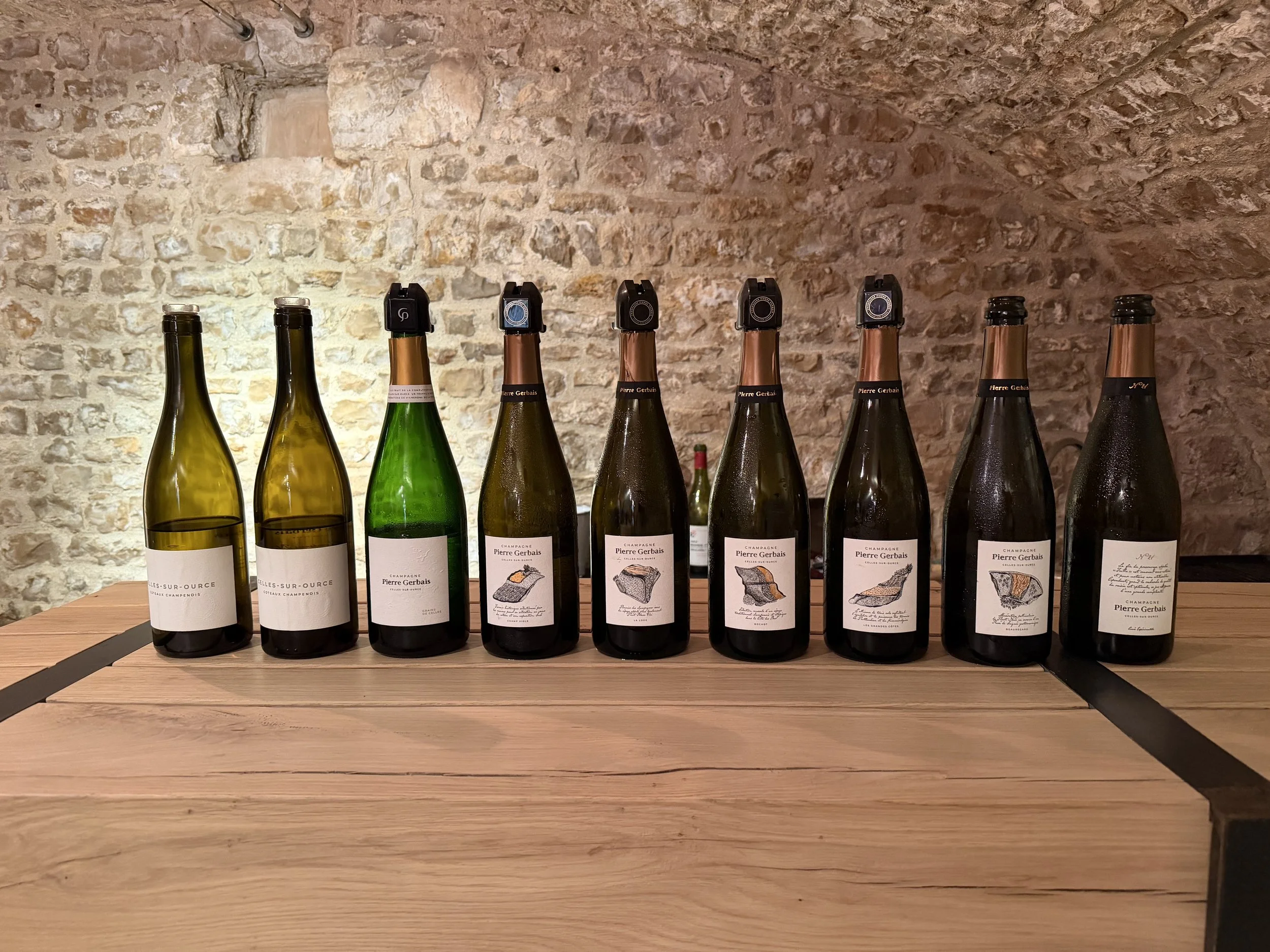
It was very exciting to taste the 2021 release of Aurélien’s solera reserve wine project started in 2011. These single-vineyard single-varietal wines are an amazing expression of the terroir of Celles-sur-Ource - Champ Viole, south-facing Chardonnay, Bochot, west-facing Pinot Meunier, Les Grandes Côtes, north-facing Pinot Noir, Beauregard, north-facing rosé de saignée of Pinot Noir, and the very special La Loge, south-facing old-vine Pinot Blanc. Gerbais is actually the largest producer of Pinot Blanc in all of Champagne! The wines have an amazing energy and drive to them that Aurélien characterizes as the inverse of how Champagnes from the Marne behave. Rather than initial chalk and soil softening on the palate to reveal fruit and other flavors, he describes his wines as landing with a burst of fruit that then gives way to intense minerality and savory notes. Stunning wines! A favorite joke of Peter’s is that winemakers in Chablis should consider planting more Pinot Noir and other grape varieties to make sparkling wine if this is what growers can do in the Aube on similar soils.
Marie Courtin & Piollot
We then made the 15 minute drive to the quaint town of Polisot located on the Seine river - yes, that same Seine that flows northwest through Troyes, then Paris, then empties into the Atlantic just south of Le Havre.
The cheerful yet spiritual Dominique Moreau created her estate Marie Courtin in 2005 and named it after her grandmother whom she describes as a “woman of the earth.” Farming biodynamically, eschewing commercial yeasts in both vin clair and bottle (very rare in Champagne), and exclusively crafting cuvées that express one grape, one parcel, and one vintage, these are intensely expressive and transparent Champagnes.
Tasting through the lineup is like experiencing a rock concert - thrumming power and electricity on the palate.
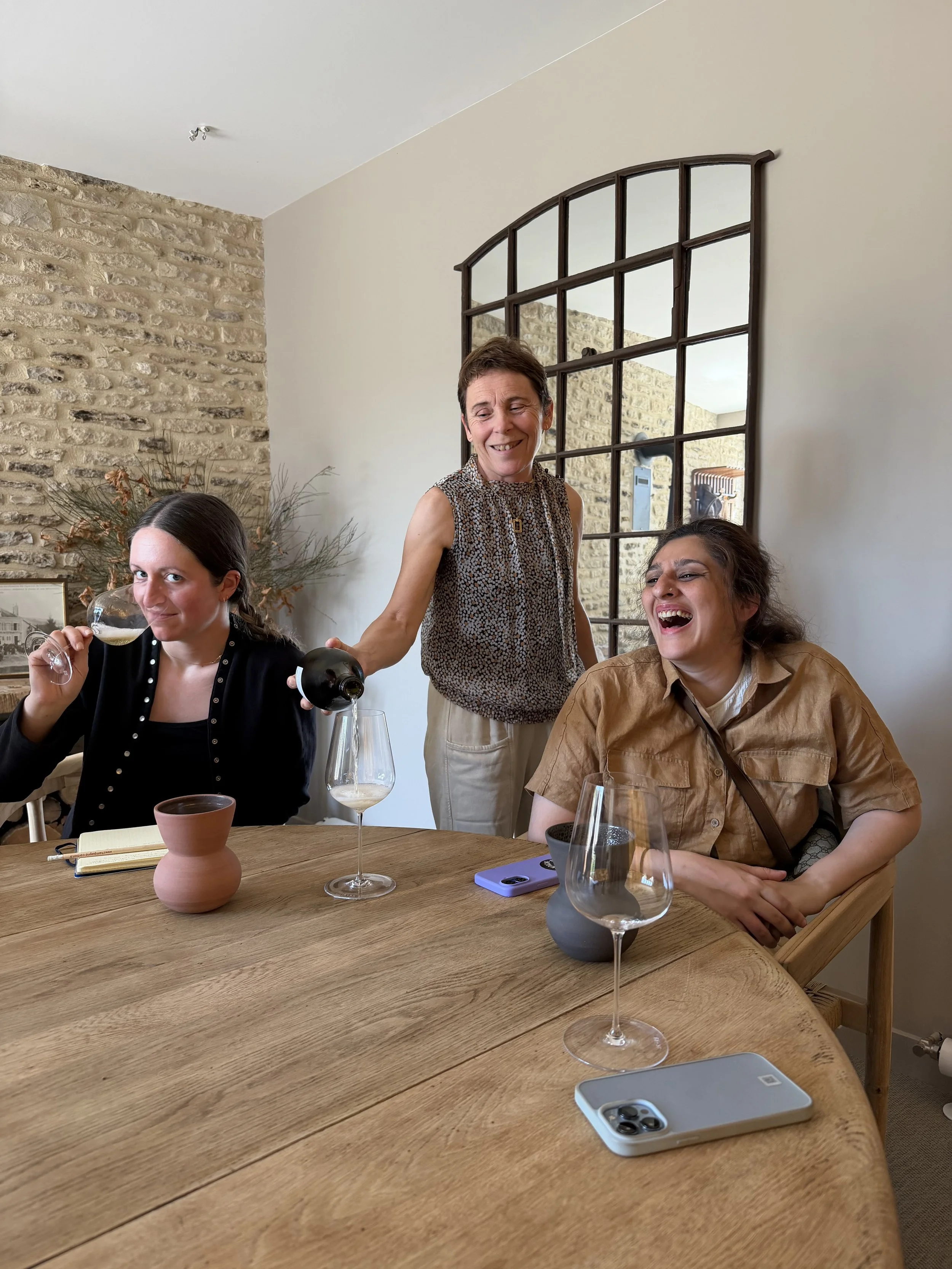
Dominique and her husband Roland Piollot (who has his own separate label) have more recently been joined by their daughters Jeanne, who also has a project in Burgundy called Dame Jeanne, and Rose, whose partner Nathan is an Australia-born chef. Together, Rose and Nathan have created a small hospitality operation at the estate, and we were delighted to enjoy a very extensive tasting menu cooked by Nathan along with pairings selected by Rose from her parents’ wineries.
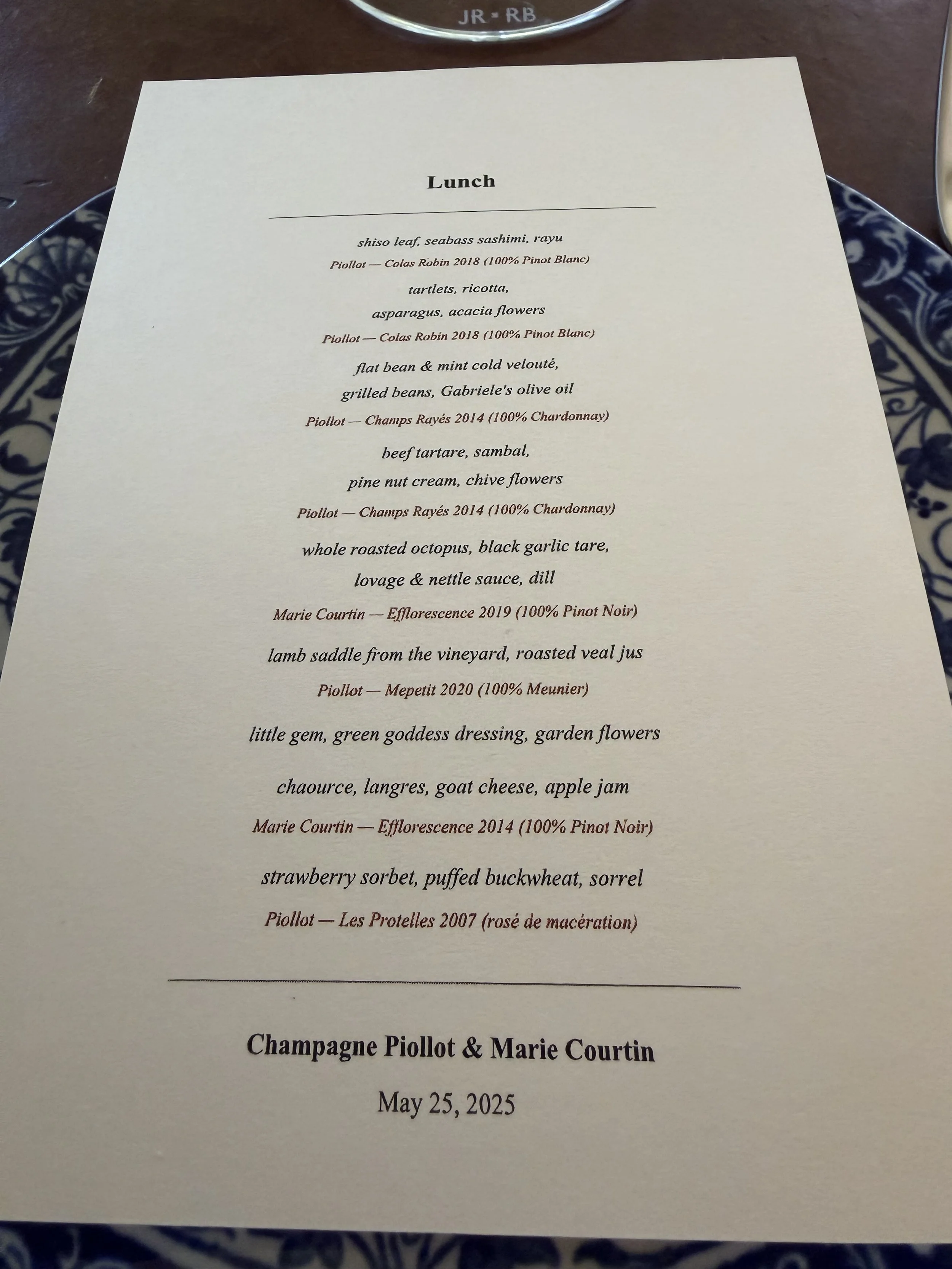
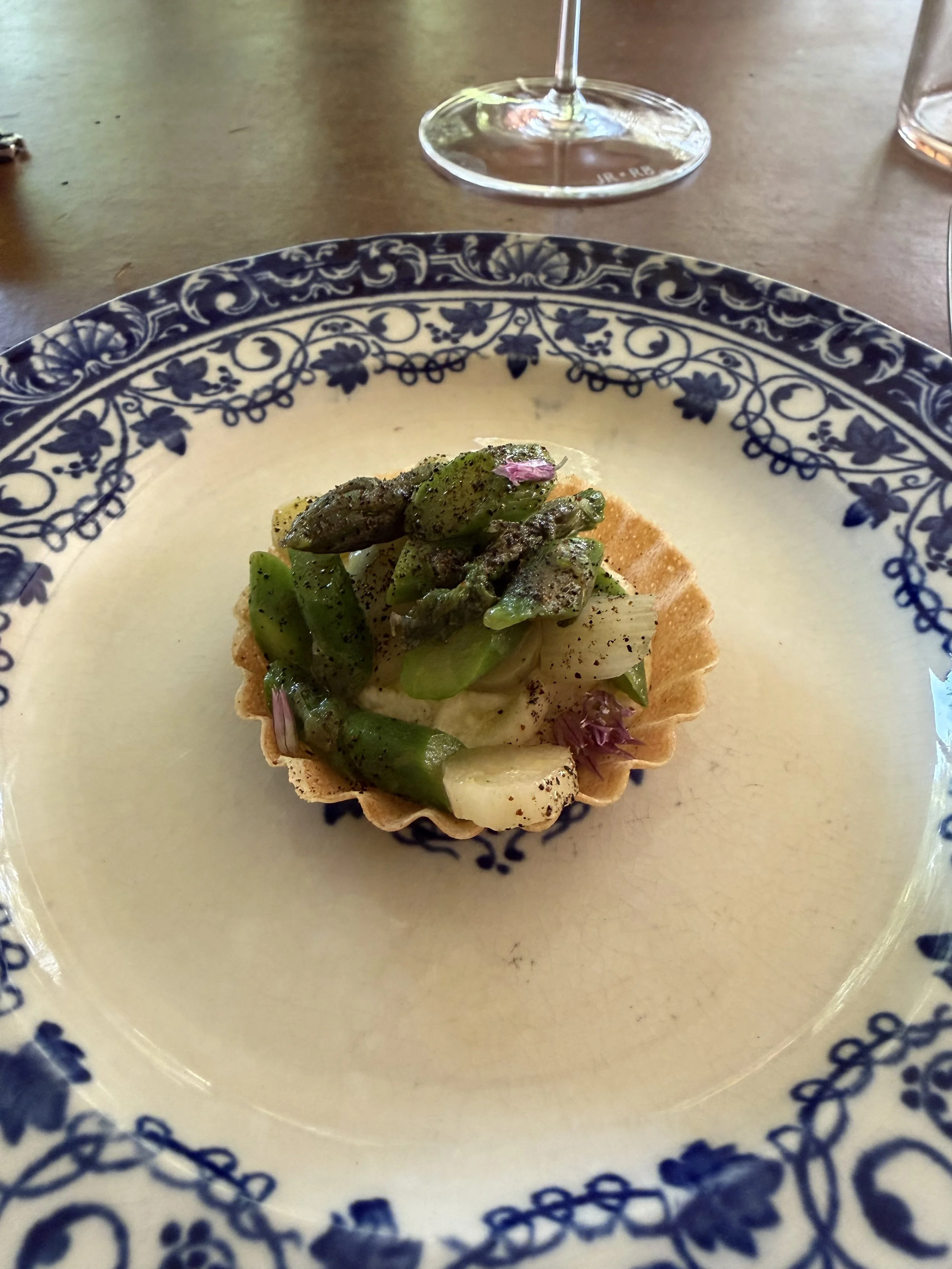
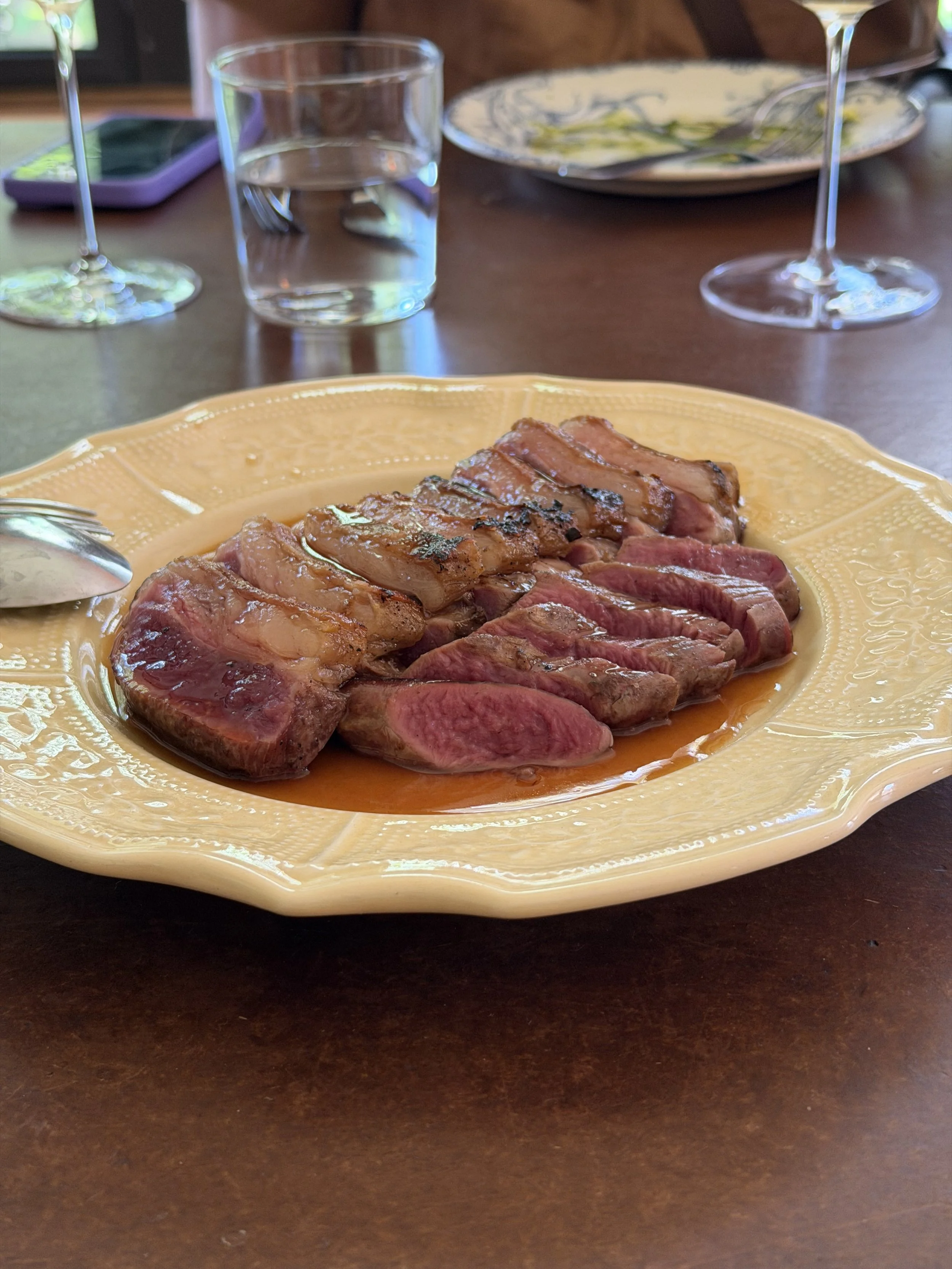
Standout dishes included a beautiful spring tartlet with asparagus (not usually an easy wine pairing, but delightful with a 100% Pinot Blanc from Piollot) as well as an absolutely delicious lamb saddle from an individual that (sorry buddy…) had to be culled from a herd the family uses to mow the cover crop in their vineyards because it was prone to eating the vine buds.
Each dish and pairing was incredibly thoughtful, and it was a unique experience with a chef who knows the wines so well.
___
Quick sidebar - we’re excited to share that we will be bringing this experience to La Fête du Champagne this October in NYC!
A Marie Courtin lunch will be one of the featured events at La Fête, and Nathan will be creating and executing the menu. We can’t wait to share this with you, and as a Pressoir Club Member, you’ll have early access to the program and to have seats held.
___
It was hard to believe that this was only day 1! Stay tuned to hear more about our incredible week, including visits with Anselme Selosse, Jean-Baptiste Lécaillon of Louis Roederer, and more.